People need practice and support as their workflow changes. Use what happens in real work to improve the system, then decide which parts can serve other teams consistently.
Change management
Organizing how people and processes move from an existing way of working to a new one.
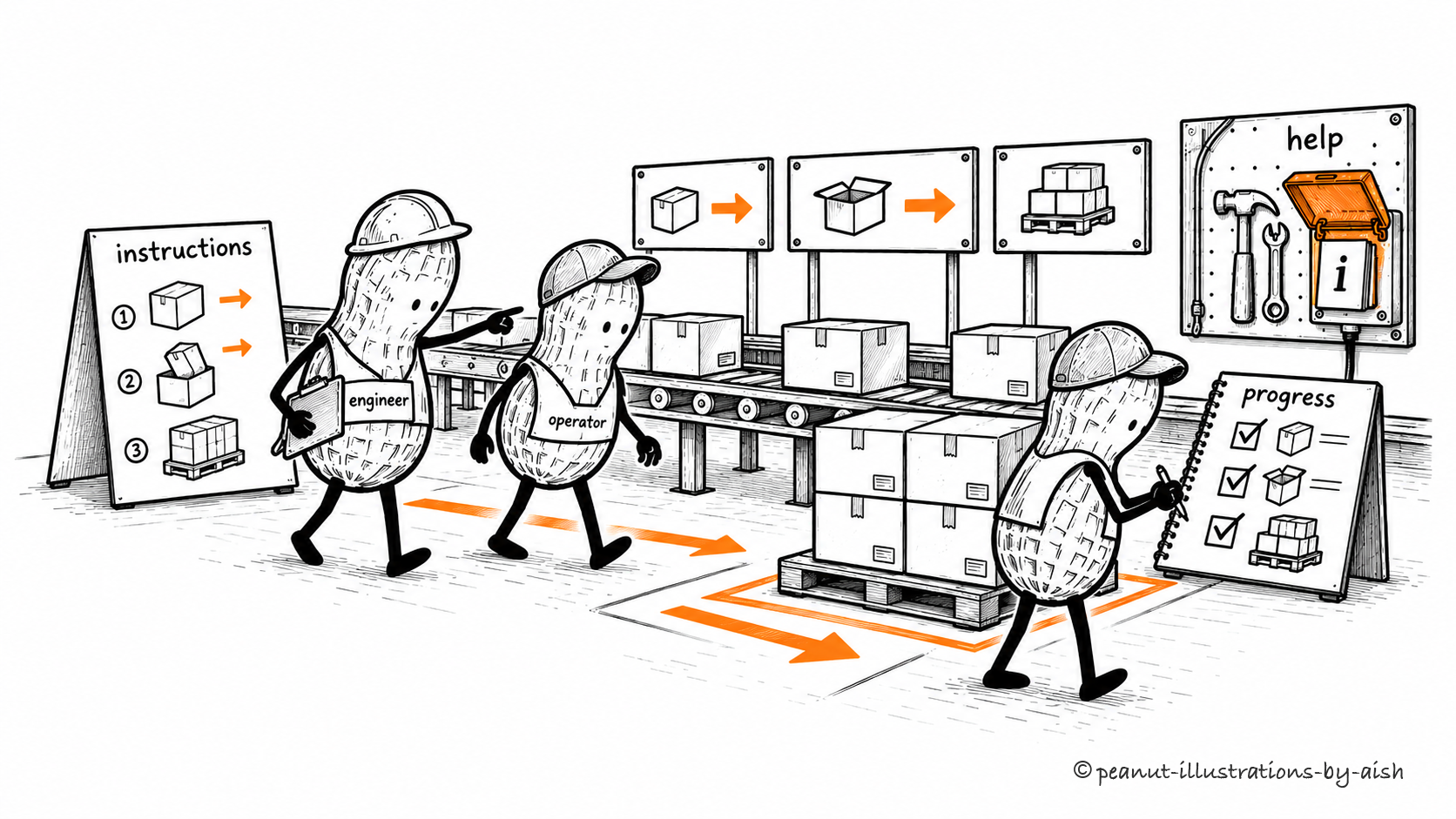
The new route needs new signs and someone available on the first shift.The signs and first-shift support help people move from the old routine to the new one.
Introducing a system can change responsibilities, review steps, and exception handling. Change management prepares people and processes for that transition. Plan around actual workloads, provide support during the change, and listen to what becomes difficult in practice. The technical release date is only one part of moving a team to a new way of working.
User enablement
Giving users the knowledge, practice, and support needed to use a system effectively.
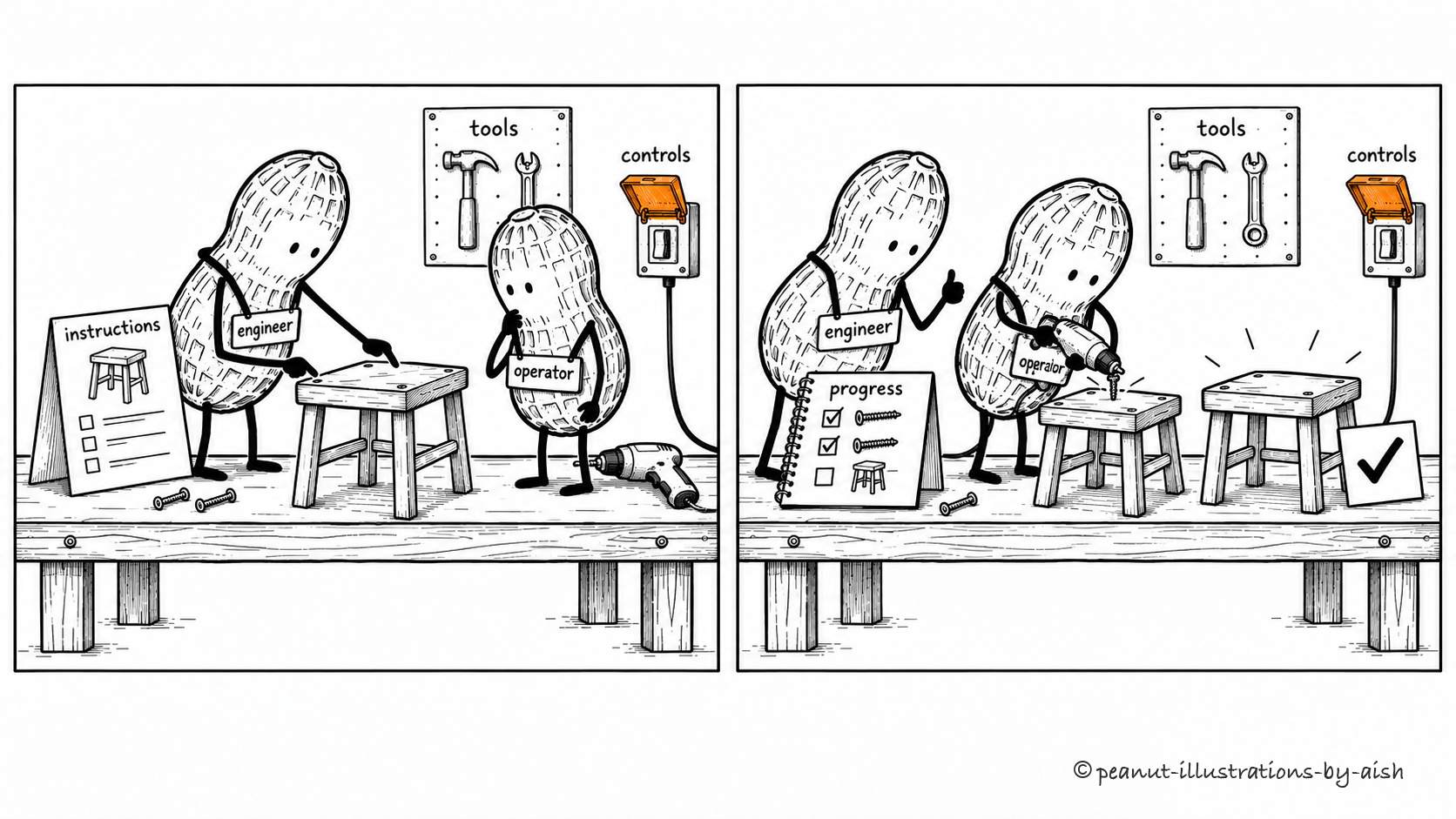
Demonstrate one job. Help the operator do the next.Practice with support helps the user build judgment about using the system in real work.
Users need practice and judgment as well as access. Enablement can cover suitable tasks, effective inputs, interpreting results, and recognizing when to seek help. Use realistic examples and make support easy to reach. The aim is for people to use the system competently in their own work, including knowing its limits.
Workflow adoption
The sustained incorporation of a system into people's regular work.
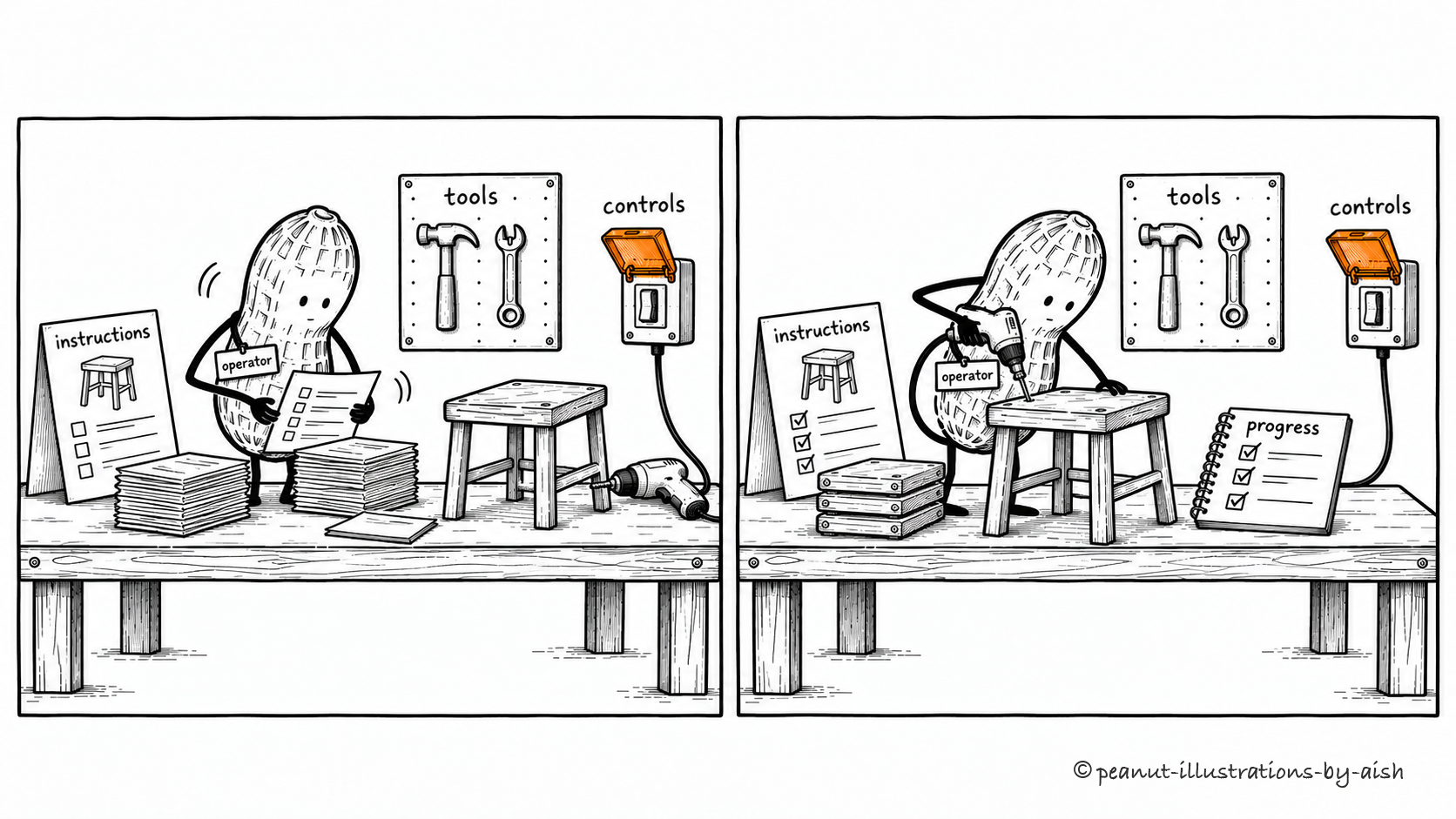
The station is handling the morning's actual orders.The change in daily practice represents adoption. Activity still needs to be assessed against usefulness and outcomes.
Adoption appears in sustained use within the intended workflow. Look at repeat usage, coverage of eligible tasks, and where people abandon the process. Then connect those patterns to usefulness and outcomes. A mandatory tool can have high usage while adding effort, so activity alone gives an incomplete account of whether the change is working.
Feedback loops
Processes that use observed results or user input to inform changes and then assess their effects.
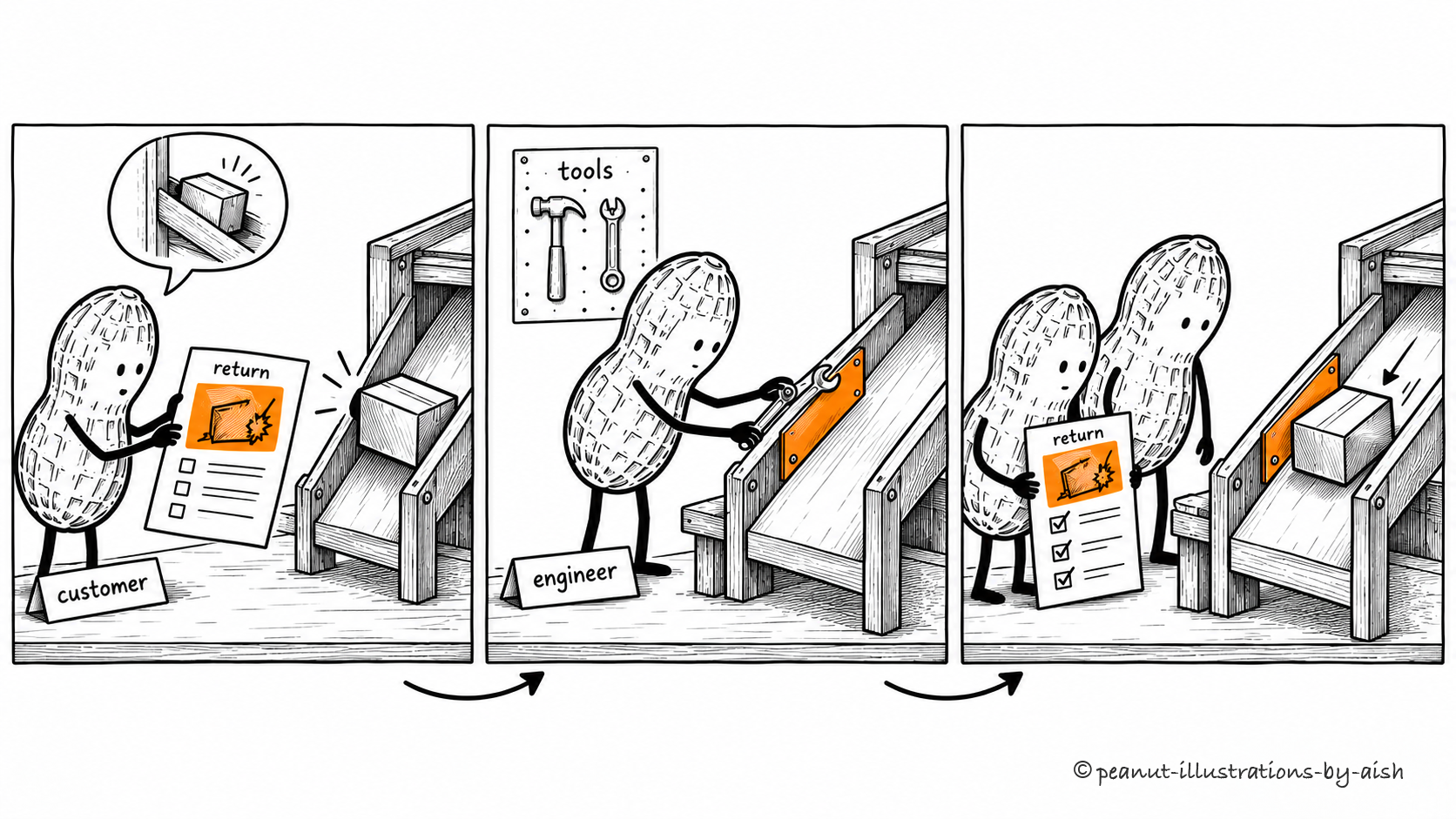
The next parcel tests whether the chute adjustment helped.The loop closes when the effect of the change is observed, rather than when the feedback is collected.
Feedback becomes a loop when it informs a change and the effect of that change is assessed. In an AI application, the response might involve prompts, retrieval, tools, or workflow design. Assign responsibility for interpreting the evidence and checking the result. Simply collecting ratings leaves that work undone and does not automatically update the model.
Productization
Turning a solution into a repeatable offering that can serve a defined group of users consistently.
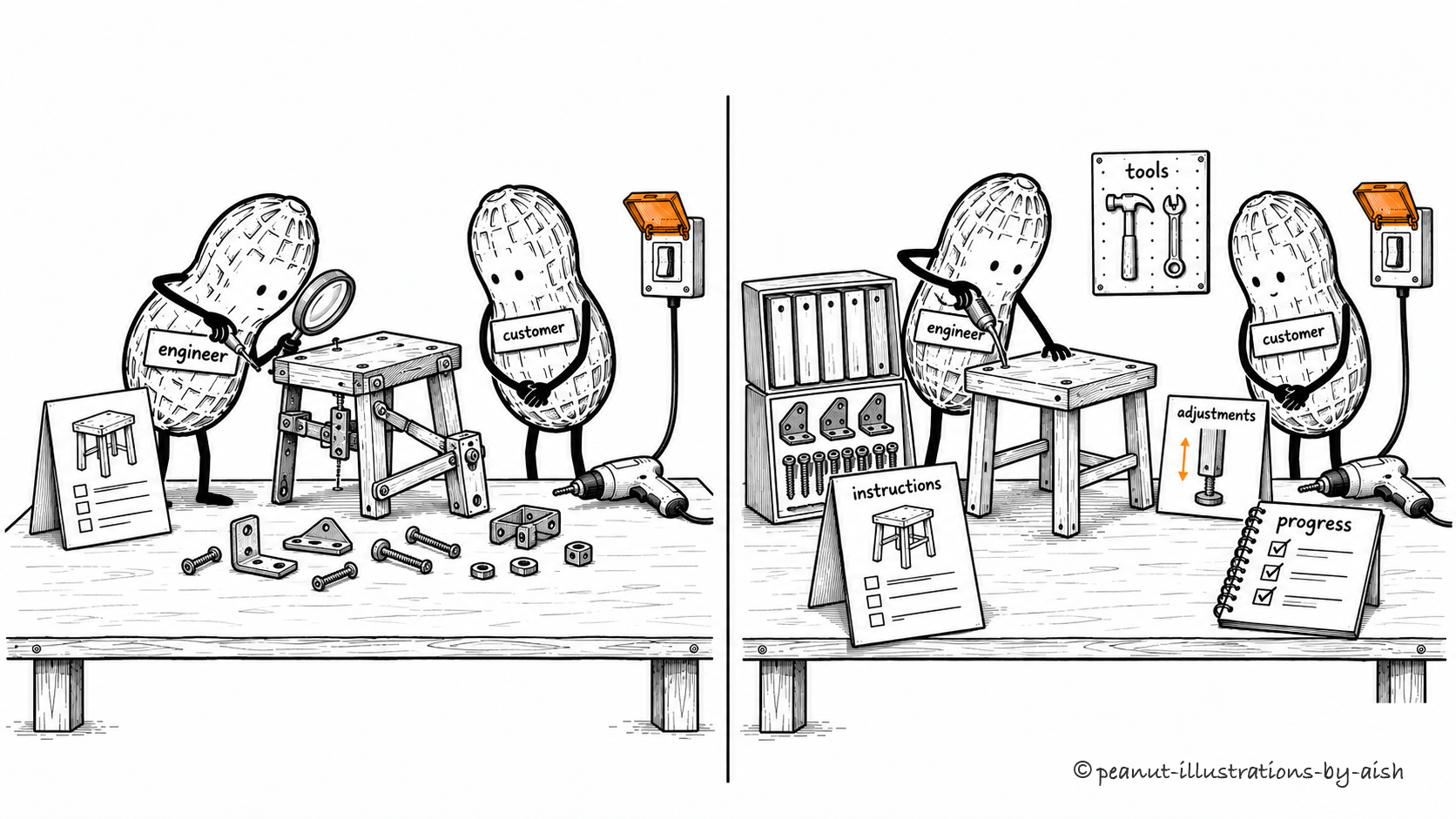
The one-customer contraption becomes a kit other teams can use.The kit represents an offering designed for consistent reuse across a defined group of users.
Productization involves choosing what should be common across customers and what can vary. Supported options, onboarding, and ongoing support make the offering repeatable. Productionization addresses reliable operation; productization addresses serving a defined group consistently. A custom solution supplies useful evidence, but its assumptions may need substantial revision before reuse becomes practical.
Reusable components
Parts of a system designed to be used in multiple contexts through a defined interface.
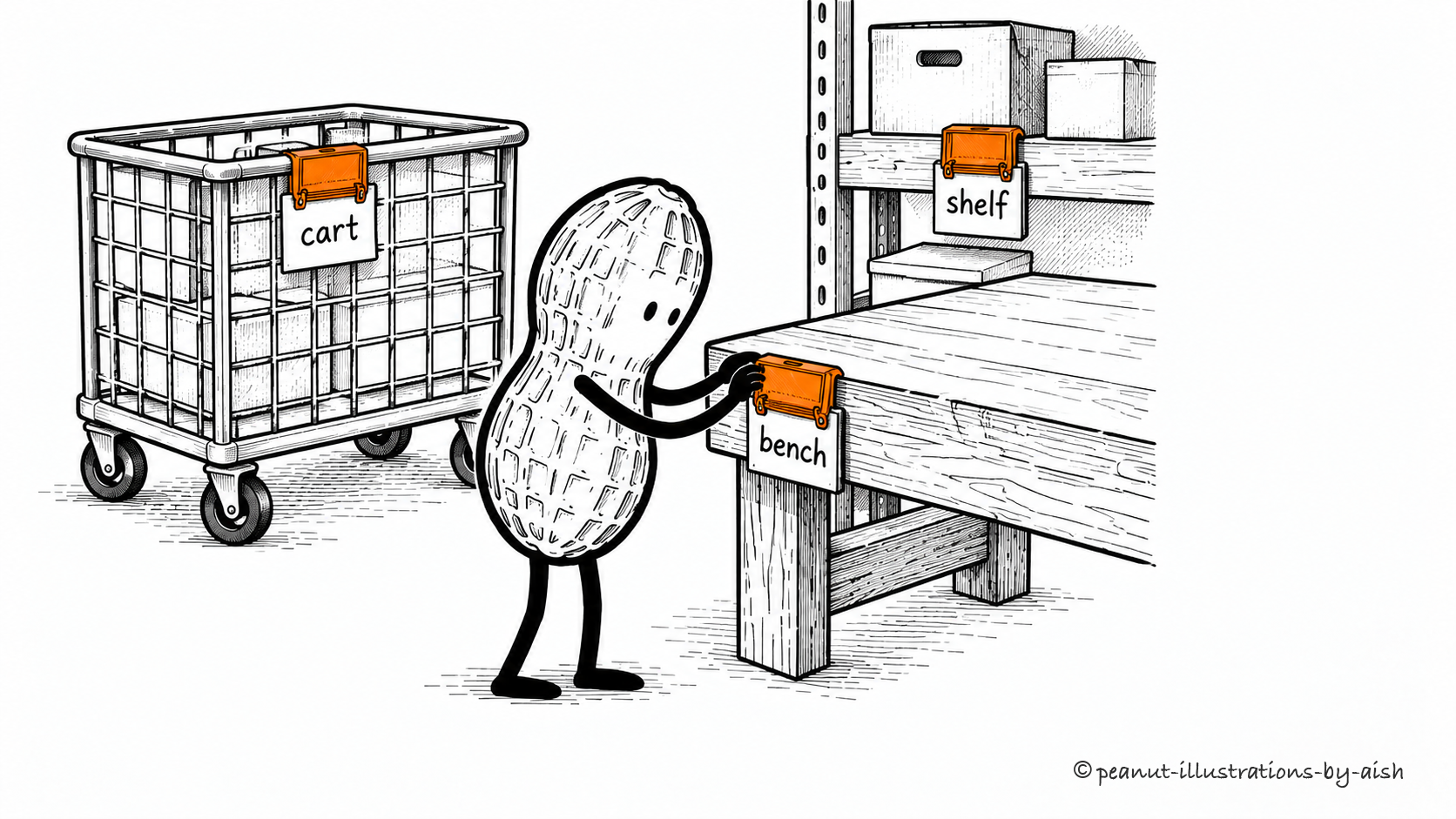
The same label holder fits a cart, a shelf, and a bench.The repeated clip represents one component used through a consistent attachment interface in several contexts.
A reusable component exposes a defined interface that several systems can rely on. It might be a connector, a validation function, or a user-interface element. Document its assumptions so callers know where it fits. Shared maintenance is useful, but changes deserve attention because their effects can reach every place that uses the component.
Configuration versus customization
Configuration selects supported settings; customization changes or extends a system's implementation.
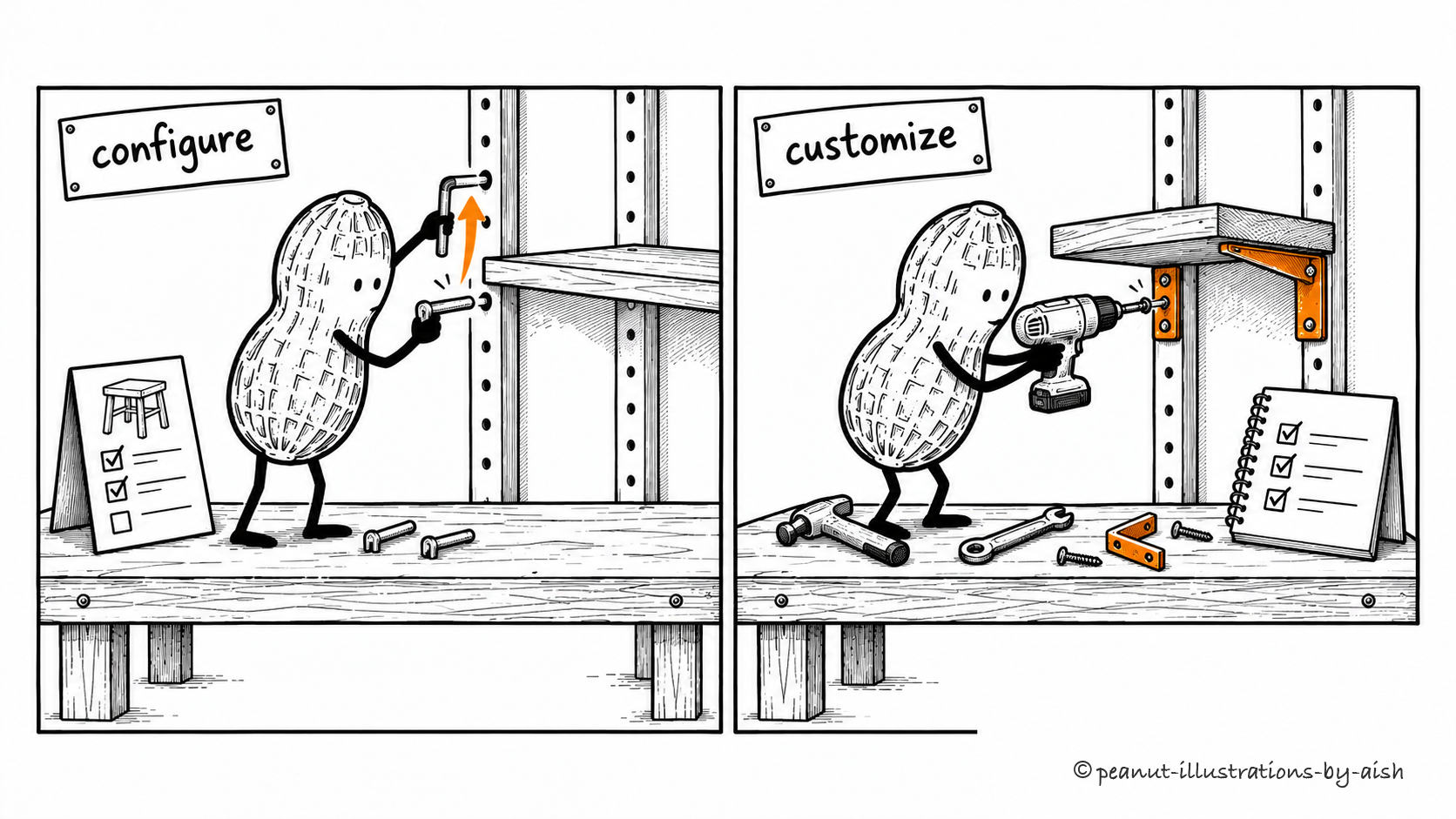
Move the provided peg, or make a new bracket.The provided adjustment is a supported setting. Fabricating a bracket changes the implementation and its maintenance needs.
Choosing a supported model option is configuration. Writing a new integration is customization.
Both can meet a requirement, with different implications for maintenance and upgrades. Check the product’s supported settings and extension points before estimating the work, because that boundary determines who owns the resulting behavior.
Product feedback
Evidence, observations, and requests from product use that inform product decisions.
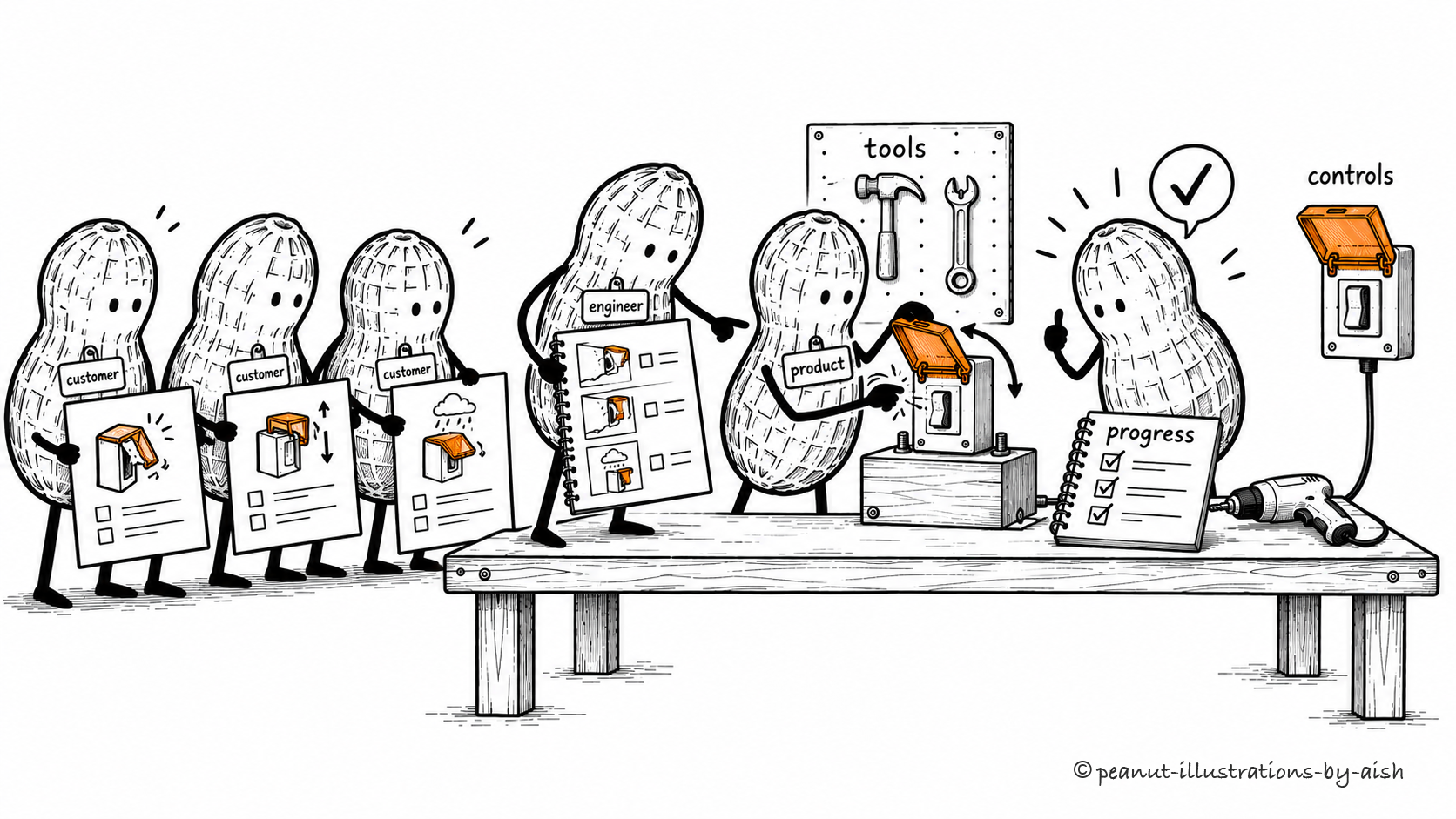
Three customers have encountered the same awkward latch.The shared difficulty supplies evidence for a product decision. The proposed fix still needs investigation and evaluation.
Product feedback helps a team decide which problems deserve attention. A request is one kind of evidence; observed difficulty and repeated patterns of use are others. Understand the underlying need and who is affected before choosing a solution. Several customers asking for the same outcome can be more informative than their agreement on a particular feature.
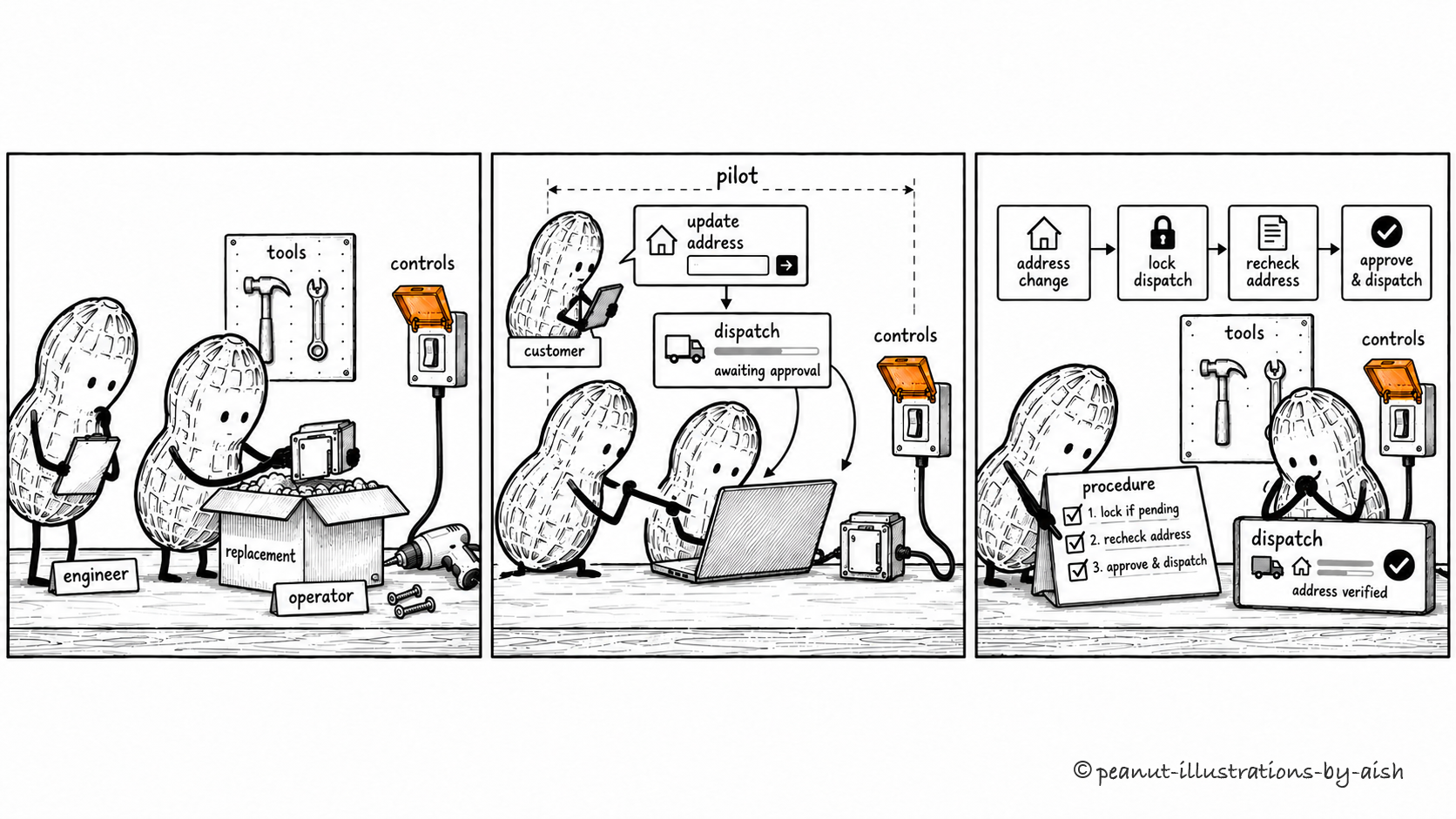
Worked example · Order 17 · final installment of 4
The address changed. The dispatch needs a fresh check.The changed details need a fresh check and approval of the actual action. The exception becomes evidence for evaluation and operating procedures.
During the pilot, the engineer discovers an exception the demonstration missed: an address can change while a dispatch is waiting for approval. The team adds a check that the action still matches the approved details. A material change requires approval of the revised action before dispatch.
That case joins the evaluation suite. The team compares operator effort and correction rates with the existing process, assigns ownership of unresolved dispatches, and establishes monitoring. Those findings guide the decision to expand the pilot and identify which parts are useful across other teams.