The protagonist now plays an engineer. Before building, watch the work, identify the records people rely on, and learn who owns the decisions. A useful system must fit that setting.
Forward Deployed Engineer (FDE)
An engineer who works closely with customers to build and deploy solutions in their operational environment.
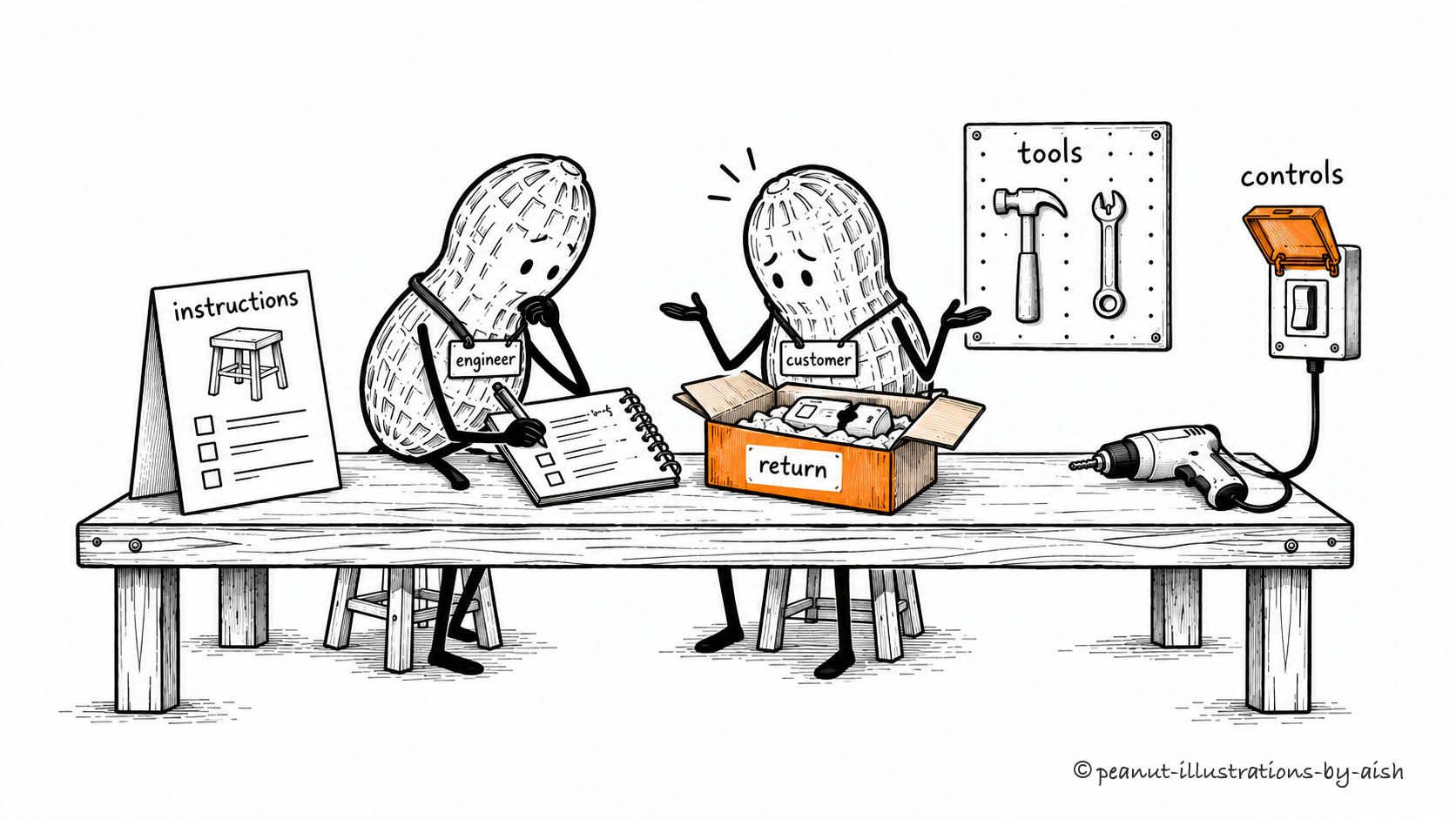
The workbench arrives in the customer's packing room.Peanut is the engineer here. The customer and operator are people whose real workflow shapes the technical work.
An FDE works closely with customers to turn technical capabilities into systems that fit their operations. That can involve discovery, integration, evaluation, implementation, and deployment. The exact remit varies by company. The common thread is proximity to the customer's problem and feedback, whether the engineer works on-site, remotely, or through a mixture of both.
Investigating customers' problems, needs, and constraints before deciding what solution to build.
Sit beside the difficult return before proposing a new process.The conversation takes place at the point of difficulty so the engineer can investigate how the work actually happens.
Begin with evidence about the customer's problem: who encounters it, how often, and what they do today. Observation and interviews can uncover needs that a feature request leaves implicit. Record what you learned alongside what remains uncertain. That gives the build a concrete problem to address and assumptions to test.
Workflow mapping
Representing the steps, decisions, inputs, outputs, and handoffs in a process.
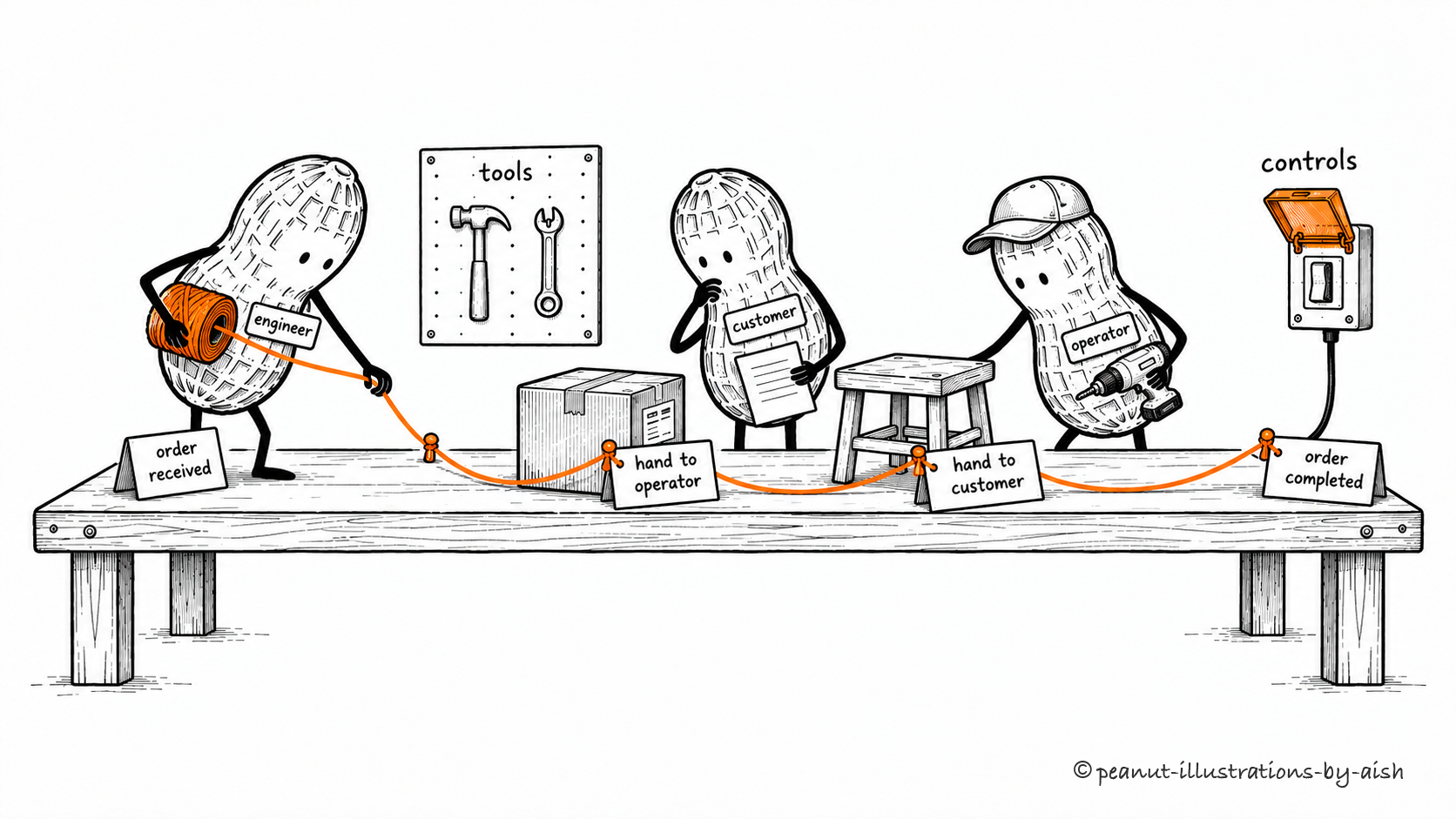
Follow the order through every desk and handoff.The string follows movement of work and responsibility, including the places an order changes hands.
A workflow map makes the process visible enough to discuss. Include inputs, decisions, owners, and exceptions, as well as the usual sequence. This helps identify where an AI component could fit and which upstream and downstream steps it depends on. The returns path may tell you more about the design than the cleanest happy-path example.
Process discovery
Finding out how work actually happens, including variations and undocumented steps.
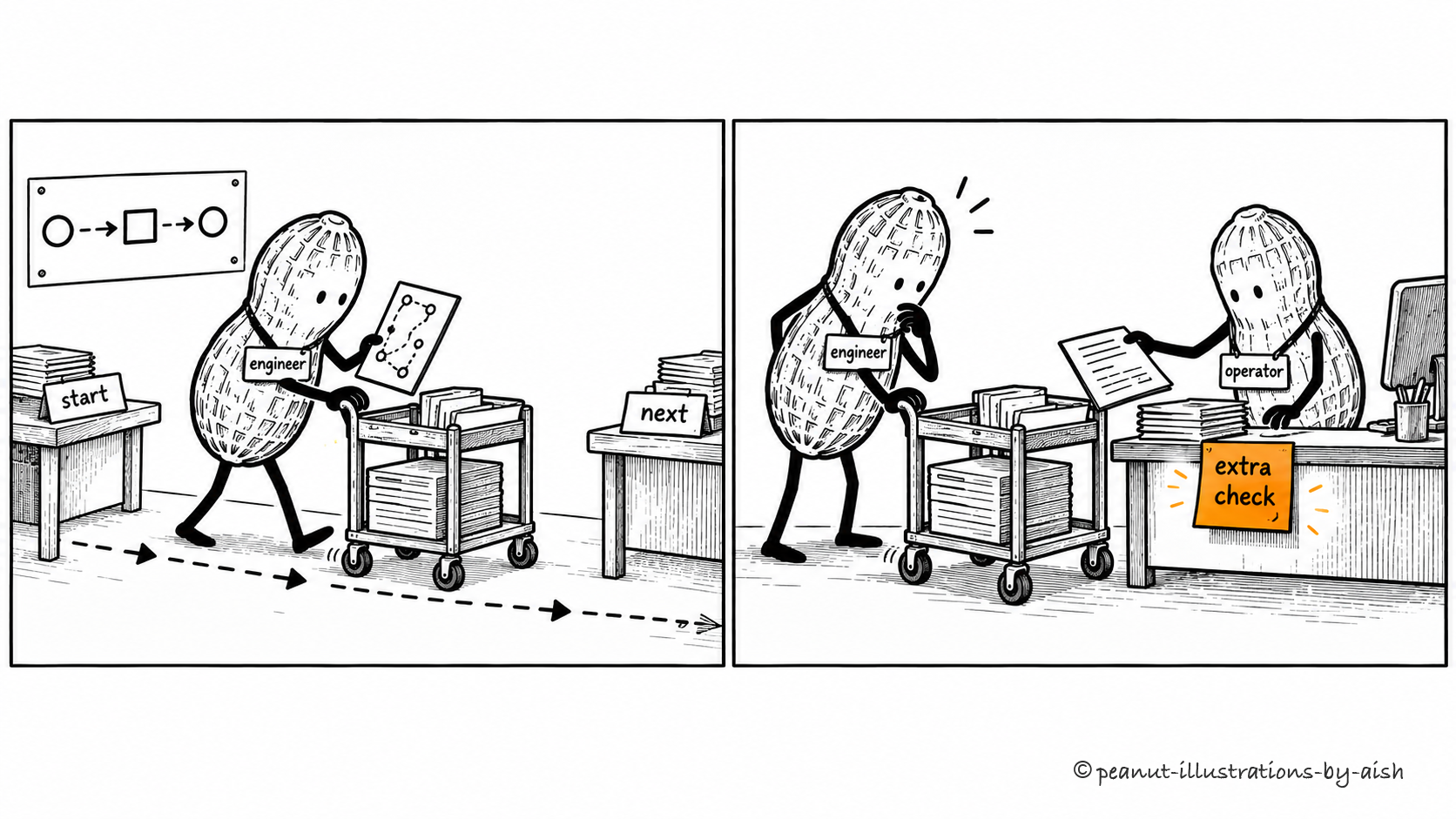
The unofficial sticky-note desk is doing quite a lot of work.The extra stop represents a step revealed by observation that was missing from the documented process.
Processes often contain steps absent from their documentation. Following real work, interviewing participants, and examining event records helps uncover them. Discovery gathers that evidence; mapping represents the resulting understanding. Pay attention when the stated procedure and actual practice disagree, because the extra step may be compensating for a constraint the new system must address.
Use-case scoping
Defining the specific problem, users, boundaries, and deliverables for a proposed solution.
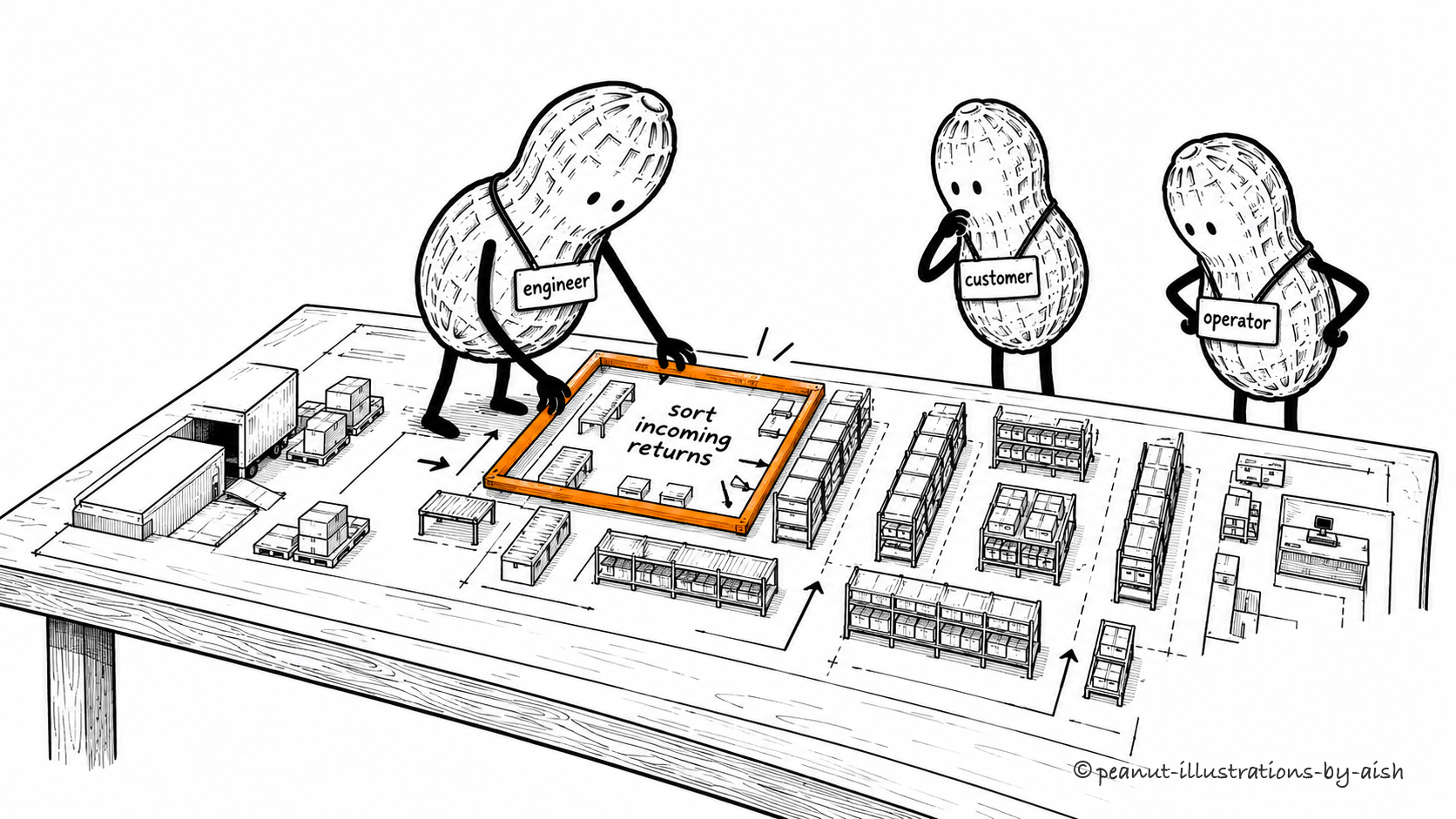
This build covers incoming returns. The rest of the warehouse can wait.The frame bounds a specific problem and leaves the surrounding operation outside the first scope.
Scope defines the problem and the boundaries of the commitment. Identify the users, supported inputs, permitted actions, and expected deliverables, including how exceptions will be handled. These choices make implementation and evaluation possible to plan. They also give the team a basis for deciding whether a new request belongs in the current work.
Success criteria
The observable conditions used to judge whether a project or system achieves its intended outcome.
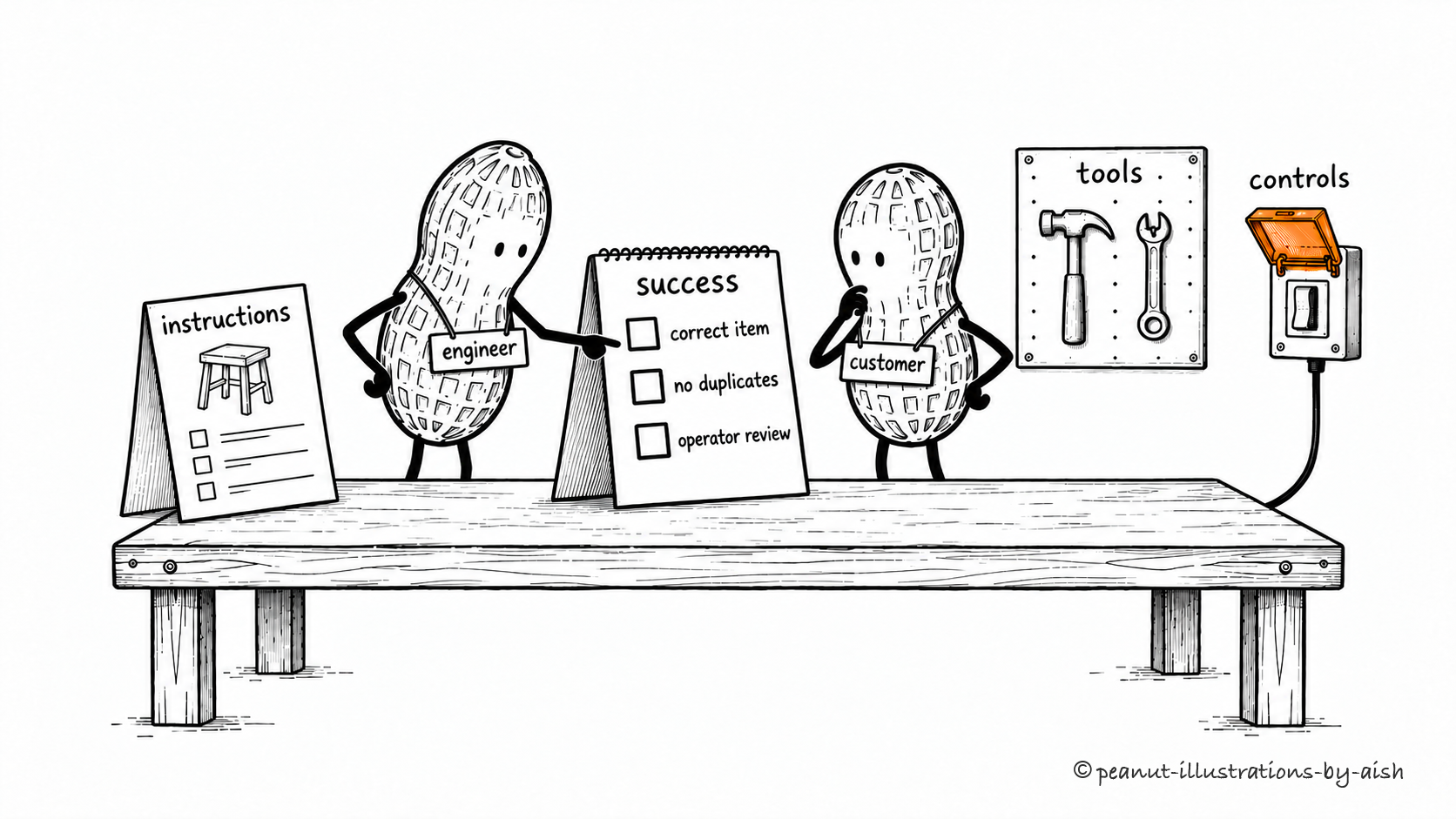
Agree on the finish checks while the workbench is empty.The empty checks are agreed conditions to assess later. They are not a claim that a system has already passed.
Success criteria connect the project to an observable outcome. They might concern correctness, turnaround time, operator effort, or failure handling. State how the result will be measured and over what period. Agreement early in the work gives everyone a common basis for judging the finished system, beyond whether its demonstration looked promising.
Systems of record
Systems designated as authoritative sources for particular business records or fields.
Two stock notes disagree. Check the designated ledger.The ledger is the agreed authority for this record. Conflicting copies need reconciliation with that authority.
A business may designate one system for customer identity and another for invoices. Integration work needs to respect which system owns each record or field, both when reading data and when sending updates. That designation establishes authority for the record, while data-quality checks address whether its contents are accurate.
Data access
The authorized and technically supported ability to retrieve or use particular data.
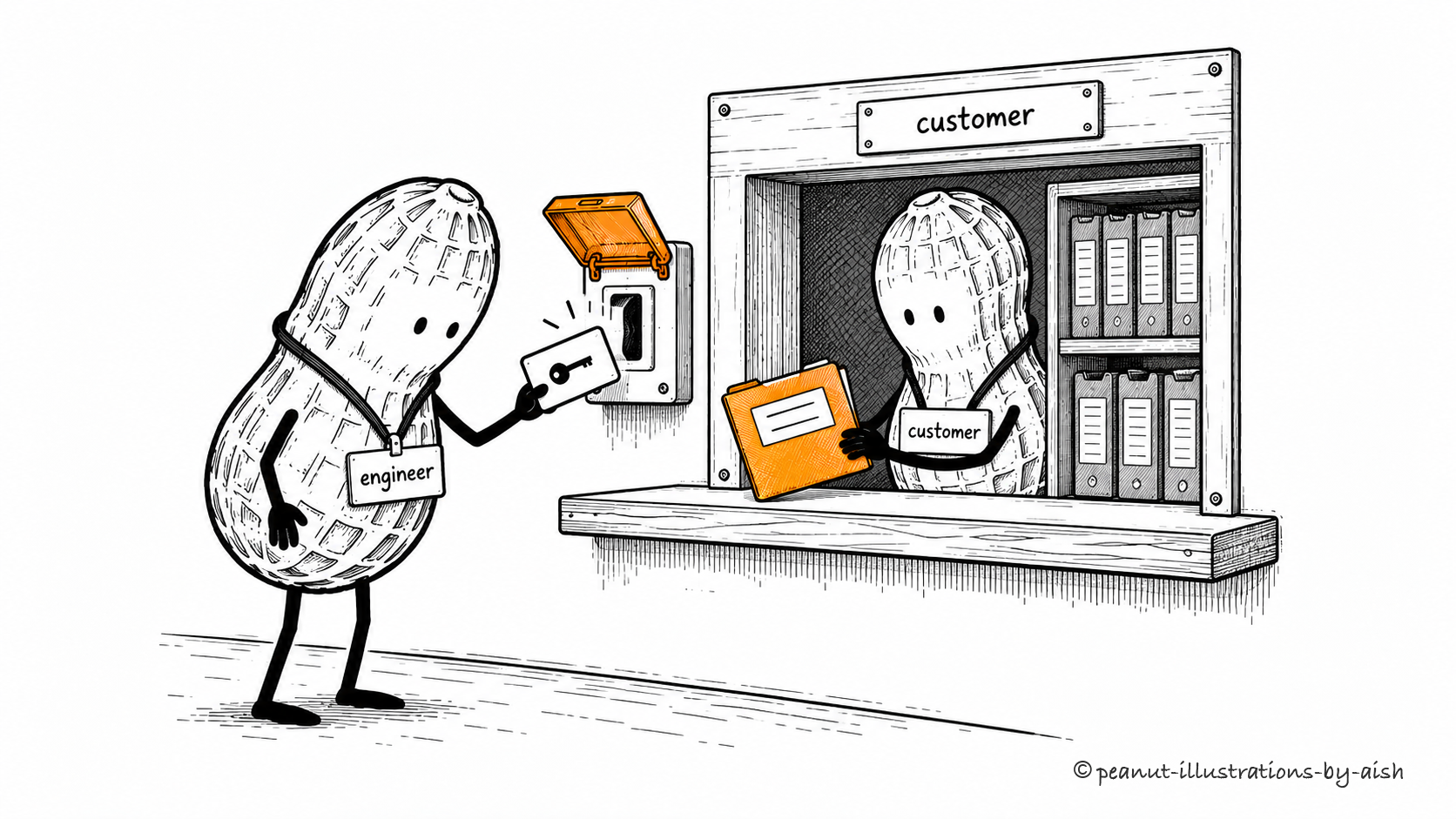
The folder is available. This pass determines which one.The hatch represents controlled access to the required data, rather than unrestricted access to every customer record.
Useful data needs both a working access path and authorization to use it. Credentials, record scope, and allowed operations determine what an application can retrieve or change. Carry those boundaries through search and tool use. Reading one collection should not silently expand into access to every record held by the service.
Integration surface
The interfaces and supported touchpoints through which a system can connect with other software.
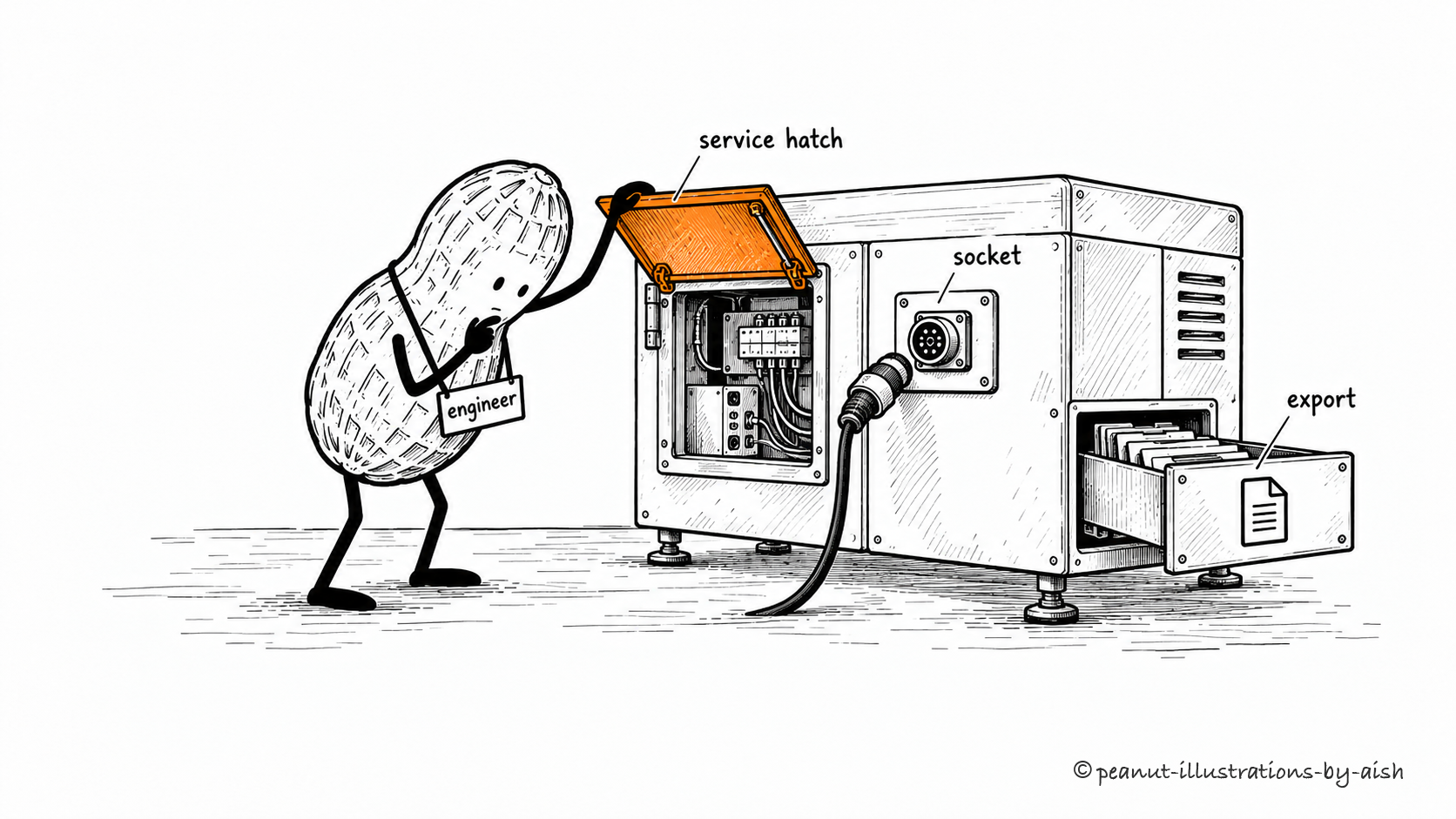
Inspect the available hatches before designing the connection.The accessible connection points represent supported ways to exchange data or actions with an existing system.
APIs, webhooks, exports, databases, and user interfaces offer different ways into a system. Each comes with its own capabilities and constraints. Establish what is actually supported before committing to an automation design. The available integration surface often determines whether a proposed workflow is straightforward, fragile, or dependent on further work from another team.
Stakeholder mapping
Identifying the people and groups affected by a project, along with their roles and decision authority.
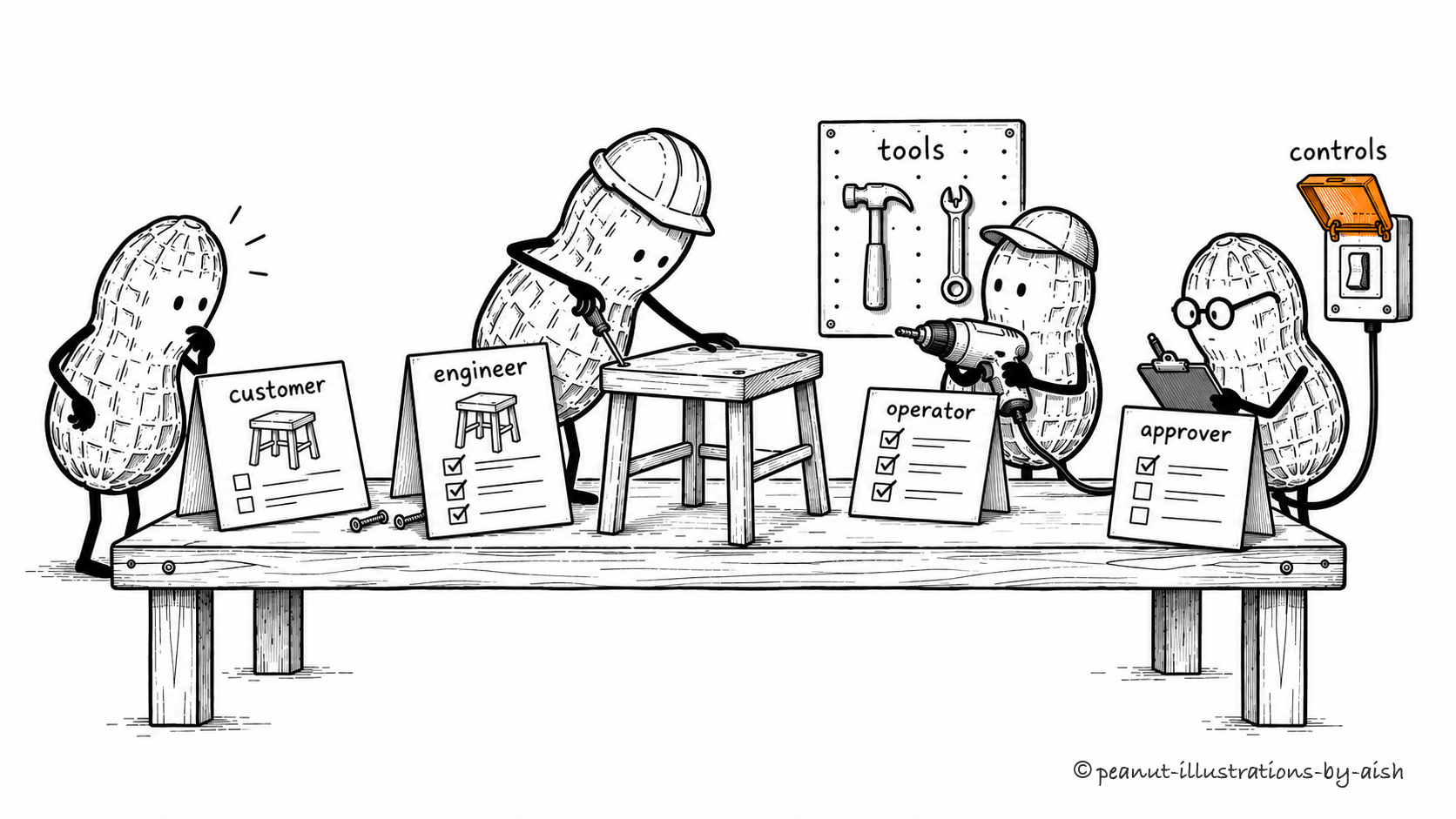
The user, owner, and approver may be three different peanuts.The roles identify who uses the result, who owns requirements, and who authorizes decisions.
A project affects more people than its most visible user. Identify who operates the system, owns its data, authorizes changes, and supports it when something fails. Map their responsibilities and decision authority. This helps the team bring in the right people before an unresolved dependency becomes a late-stage surprise.
Domain constraints
Requirements and operating realities specific to the field or business in which a system is used.
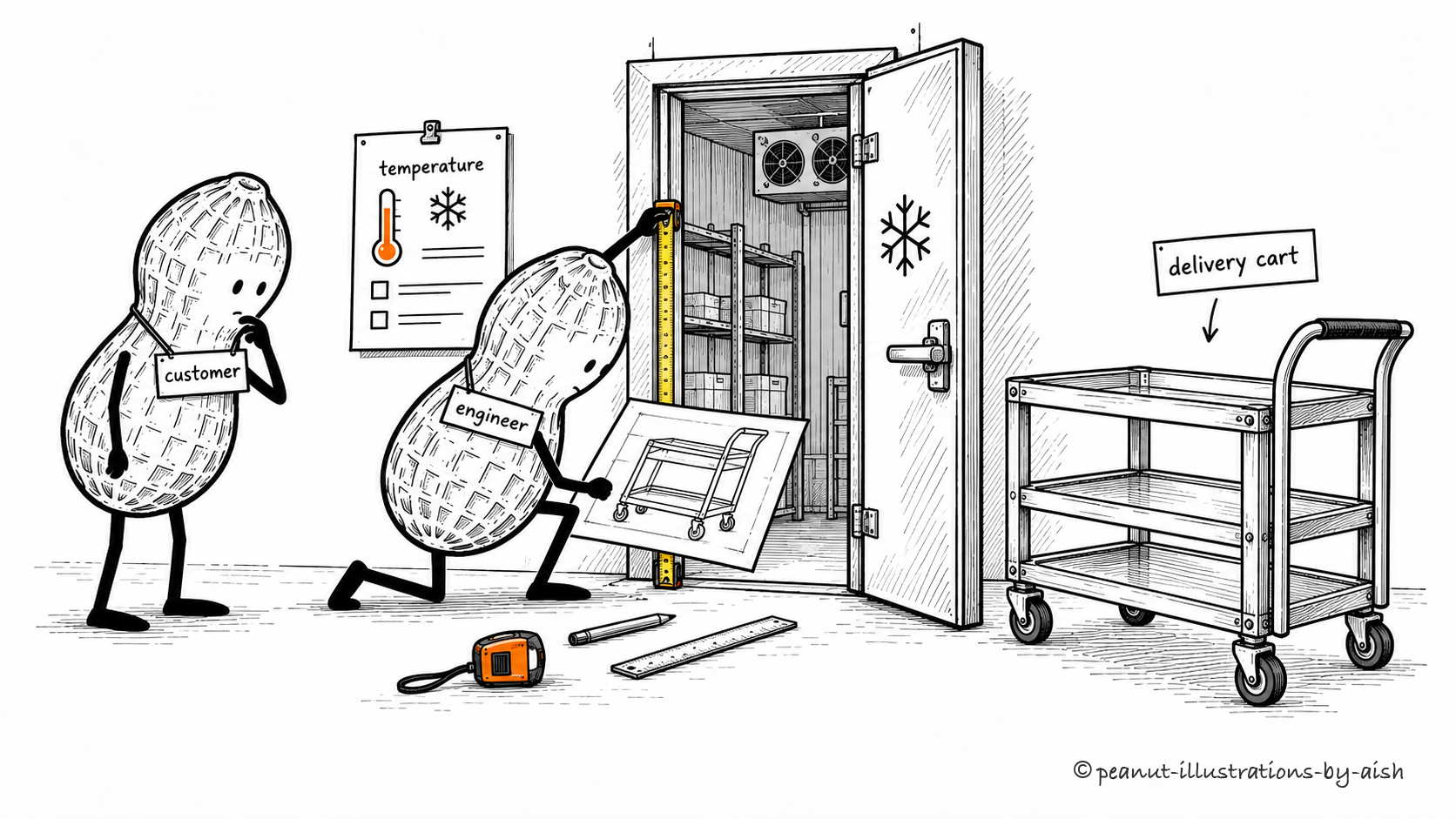
The cart has to fit through the cold-room door.Physical clearance and temperature stand for constraints from the operating domain that the design must satisfy.
Domain knowledge changes what counts as a valid solution. Operating deadlines, specialist terminology, data rules, and required decisions all shape implementation and evaluation. Gather these constraints from the people and systems doing the work. A technically successful prototype can miss its purpose if it solves a version of the problem that never occurs in practice.