A working demonstration needs operating support before it can become a dependable service. Access, recovery, monitoring, and ownership deserve deliberate engineering.
Productionization
Preparing a prototype or early system for reliable, supportable operation in its intended environment.
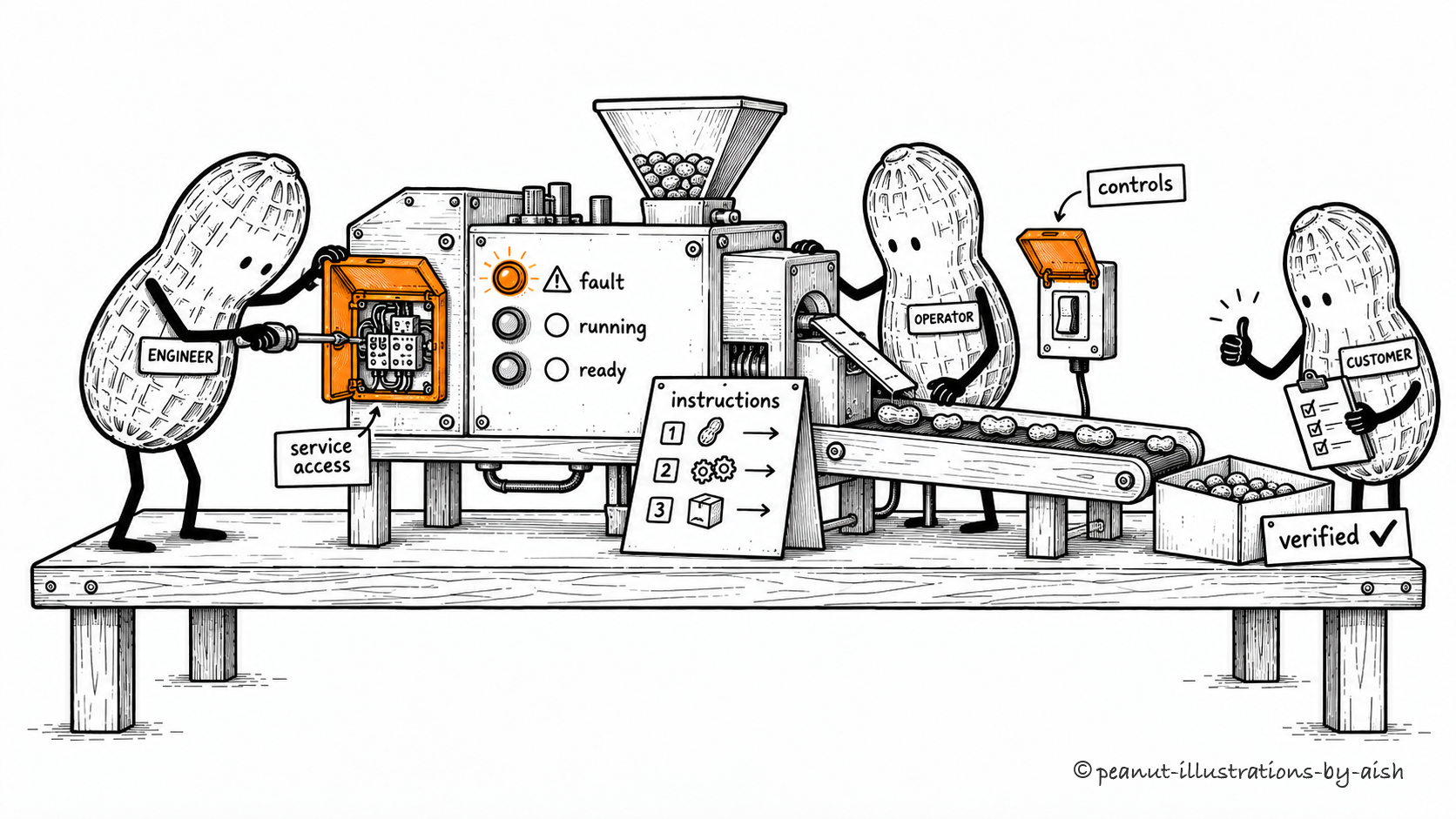
The prototype now needs a repair manual of its own.The operating mechanism needs ways to inspect, repair, and support it during regular use.
Regular operation asks more of a system than a successful demonstration. Productionization addresses the requirements for its actual workload: access control, recovery, monitoring, testing, deployment procedures, and support ownership. The list depends on the environment and consequences of failure. Real usage will continue to reveal operating needs after the first release.
Deployment
Putting a software version or system into a target environment where it can run.
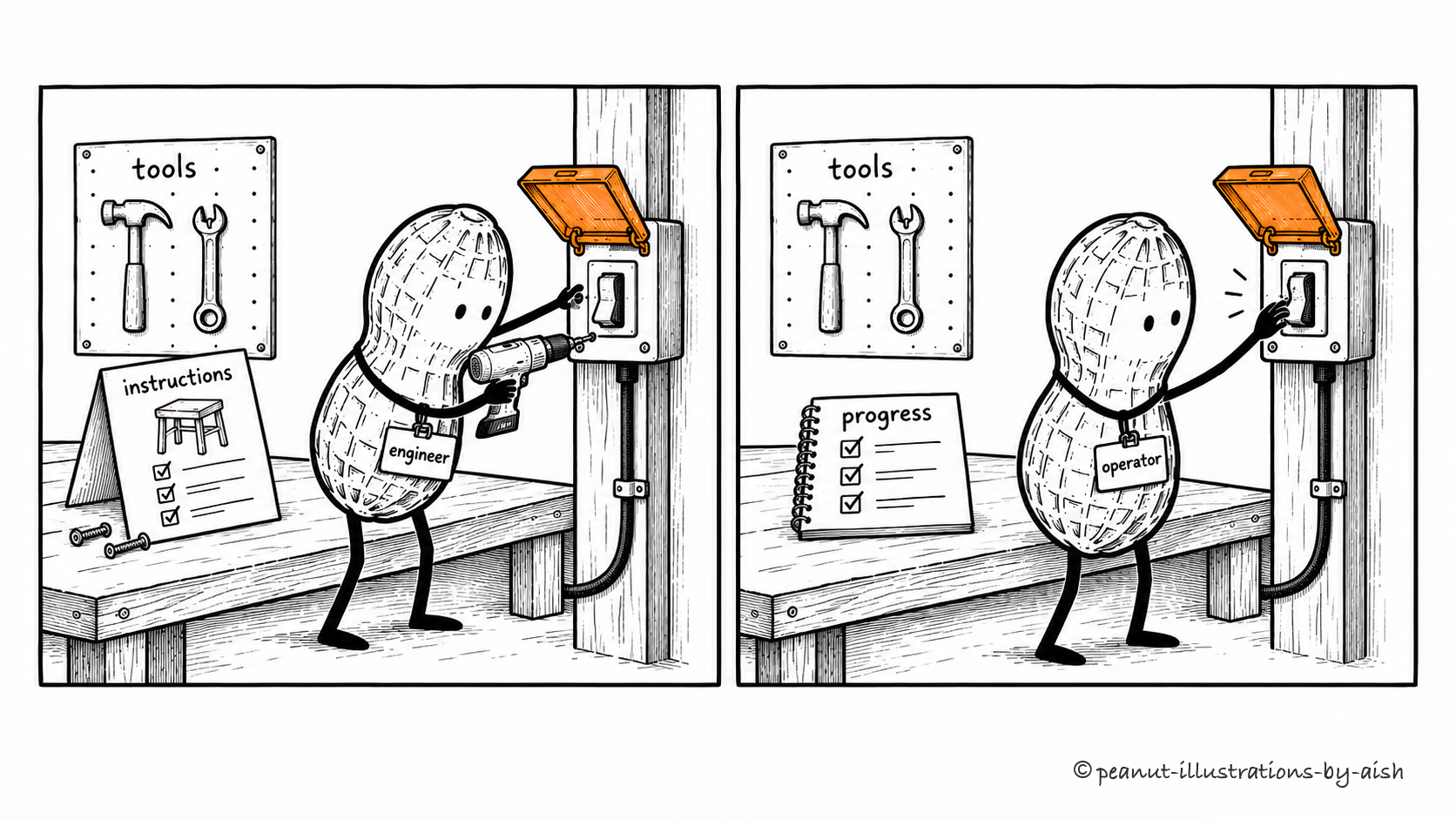
The tested device reaches its intended station.Installation puts the version into its target environment. Making behavior available to users can be a separate release step.
Deployment puts a version into an environment where it can run, whether development, staging, or production. Releasing its behavior to users can be a separate decision controlled by a feature flag or rollout process. Track which version is running and how to recover from a problematic change. Those details matter when several versions coexist.
Identity and access management
The policies and systems used to manage identities and control their access to resources.
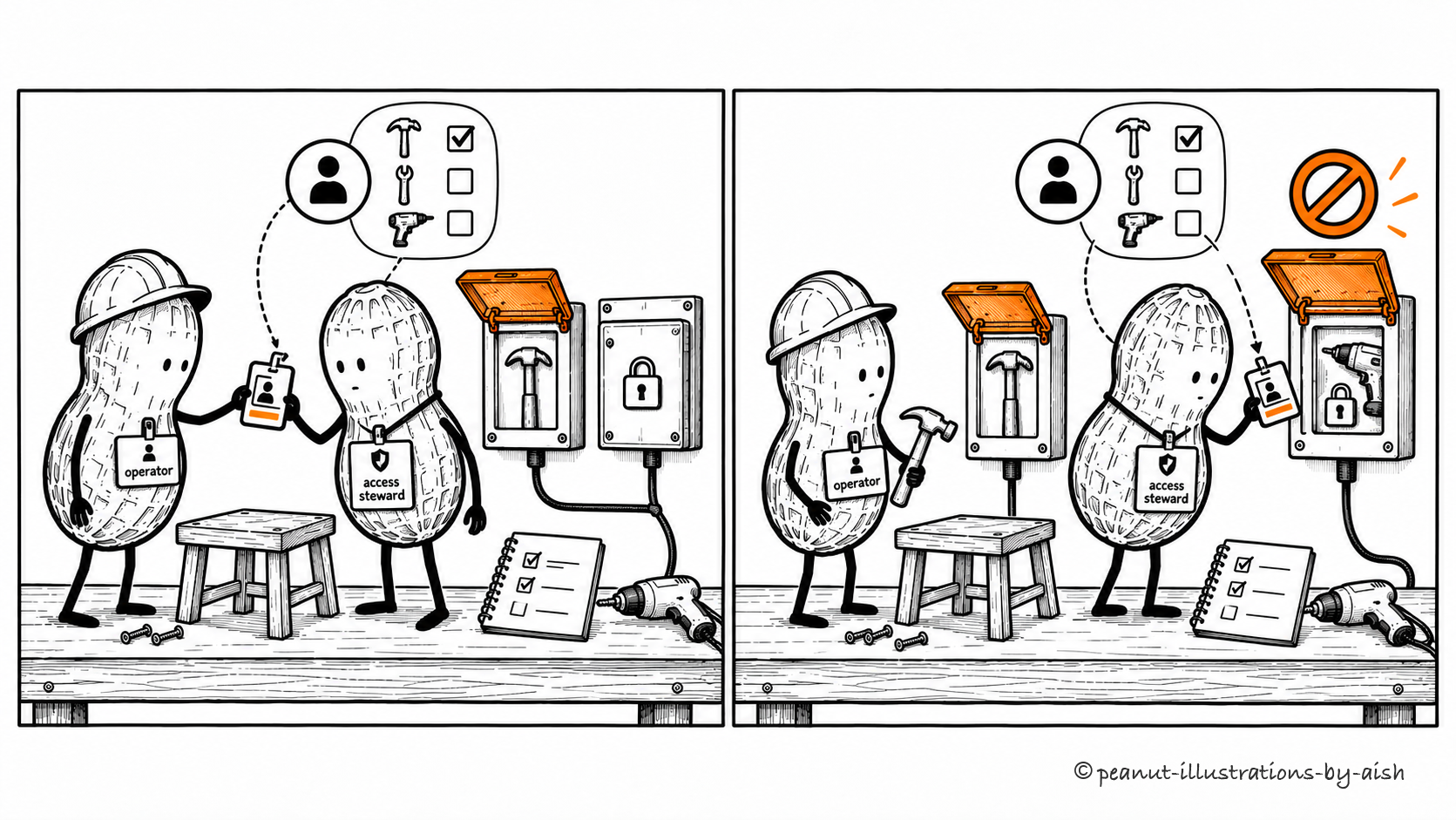
Check the badge, then the permission for this cabinet.The badge represents authentication; the per-resource permissions represent authorization enforced by the protected system.
Authentication establishes who or what is making the request. Authorization determines which actions that identity may perform on which resources. An agent application may use a service identity or delegated user access. The protected system should enforce those permissions, so a model's proposed action is subject to the same access checks as any other request.
Secrets management
Managing sensitive credentials throughout their storage, distribution, use, rotation, and revocation.
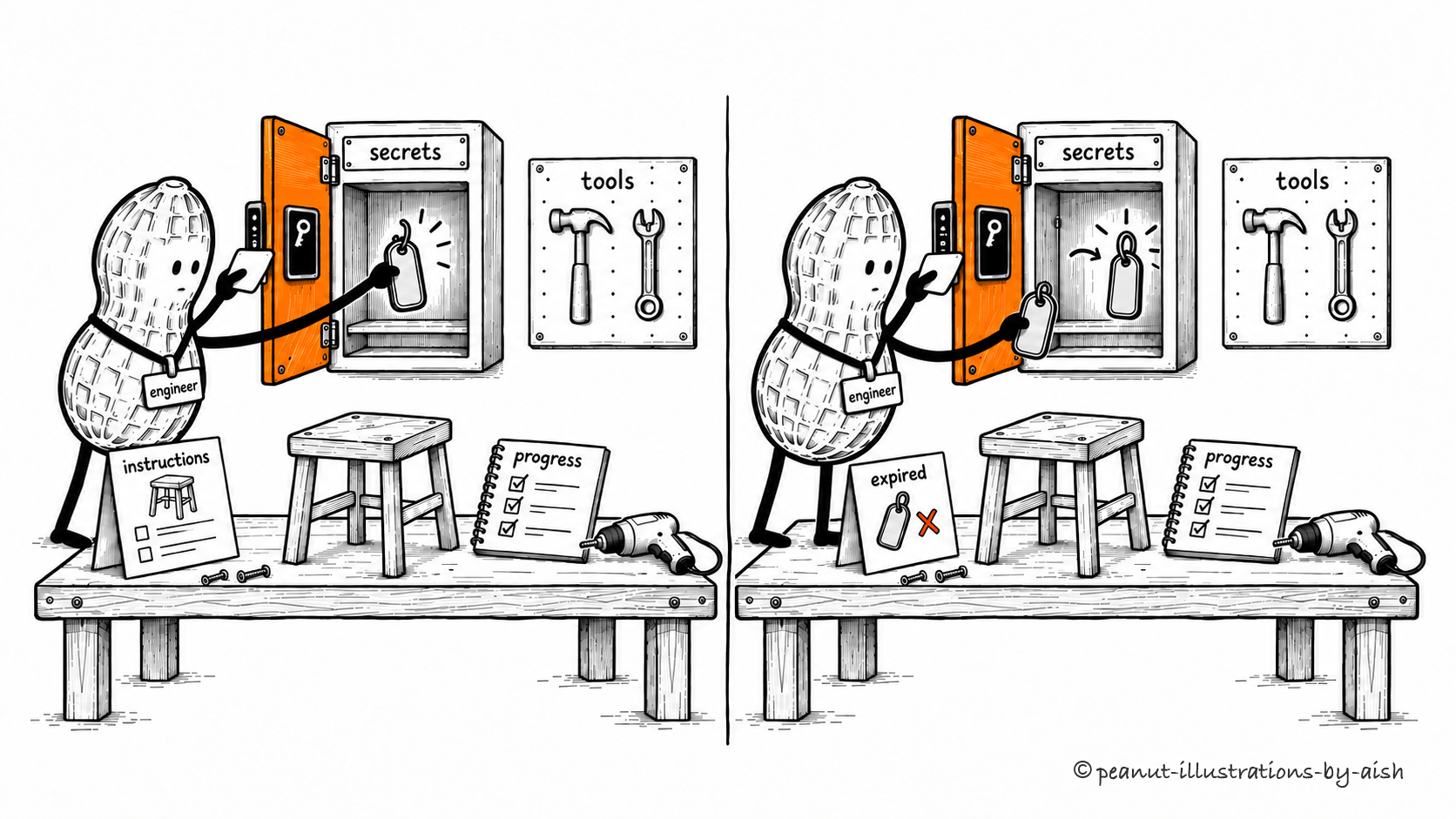
Borrow the credential through the cabinet. Replace it when due.Peanut is the engineer managing credentials here. Access, replacement, and expiry belong to a controlled process; no secret values are shown.
Applications use API keys and access tokens to reach protected services. Secrets management governs their storage, distribution, rotation, and revocation. Supply credentials to the component that needs them and control who can retrieve them. Avoid spreading them into prompts or logs where their presence expands exposure without helping the task.
Monitoring
Continuously or periodically observing system signals to track operation and detect problems.
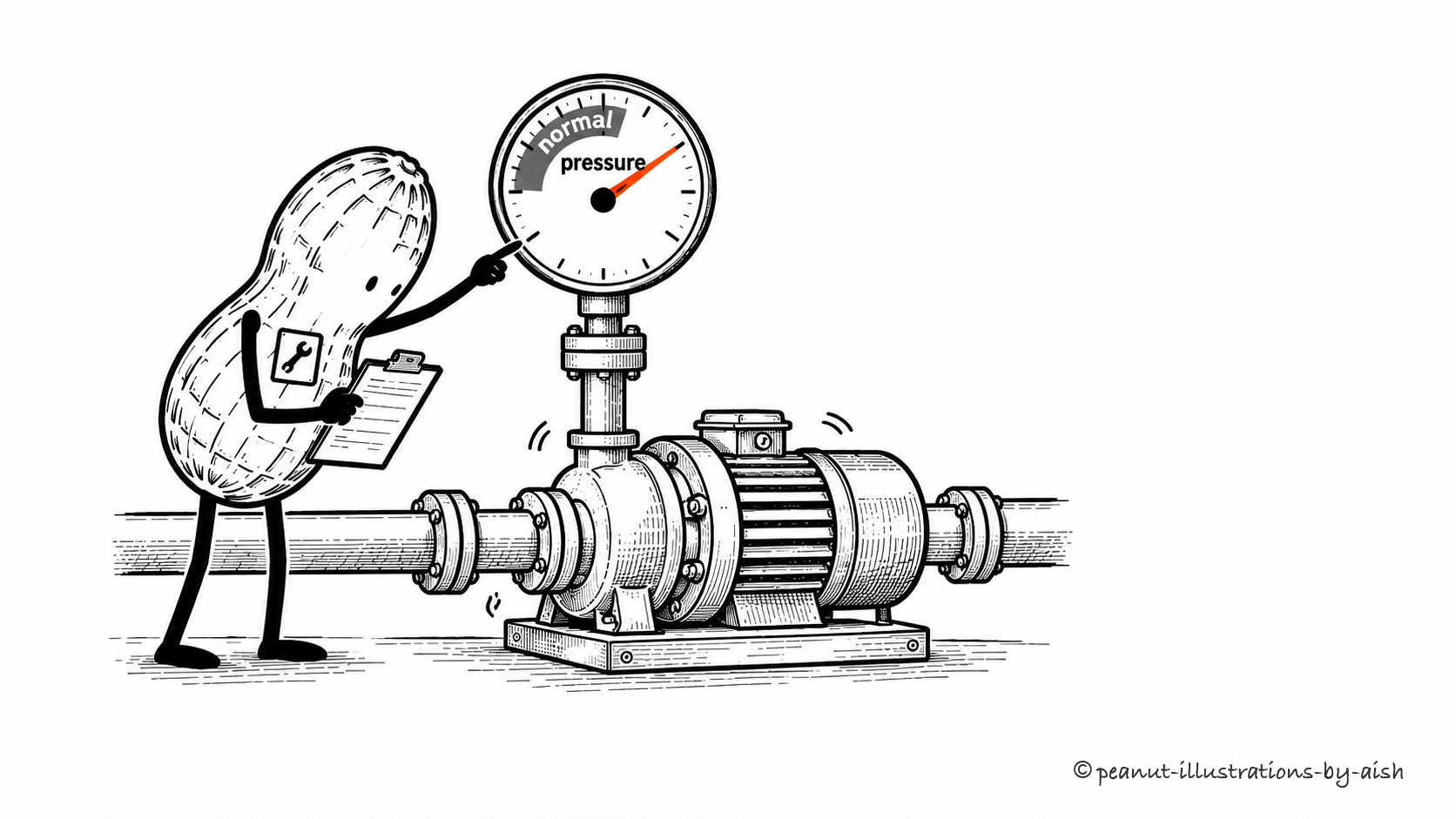
The pressure needle moves outside its usual range.The abnormal signal prompts attention while the system operates. The drawing shows detection; the response depends on the situation.
Monitoring observes the system while it operates. Error rates, latency, and cost can reveal trouble; sampled quality checks can reveal poor answers from an otherwise available service. Choose signals that reflect the intended use and attach alerts to a response someone can carry out. A dashboard is most useful when its changes lead to informed action.
Incident response
The coordinated process of identifying, containing, and recovering from an operational incident.
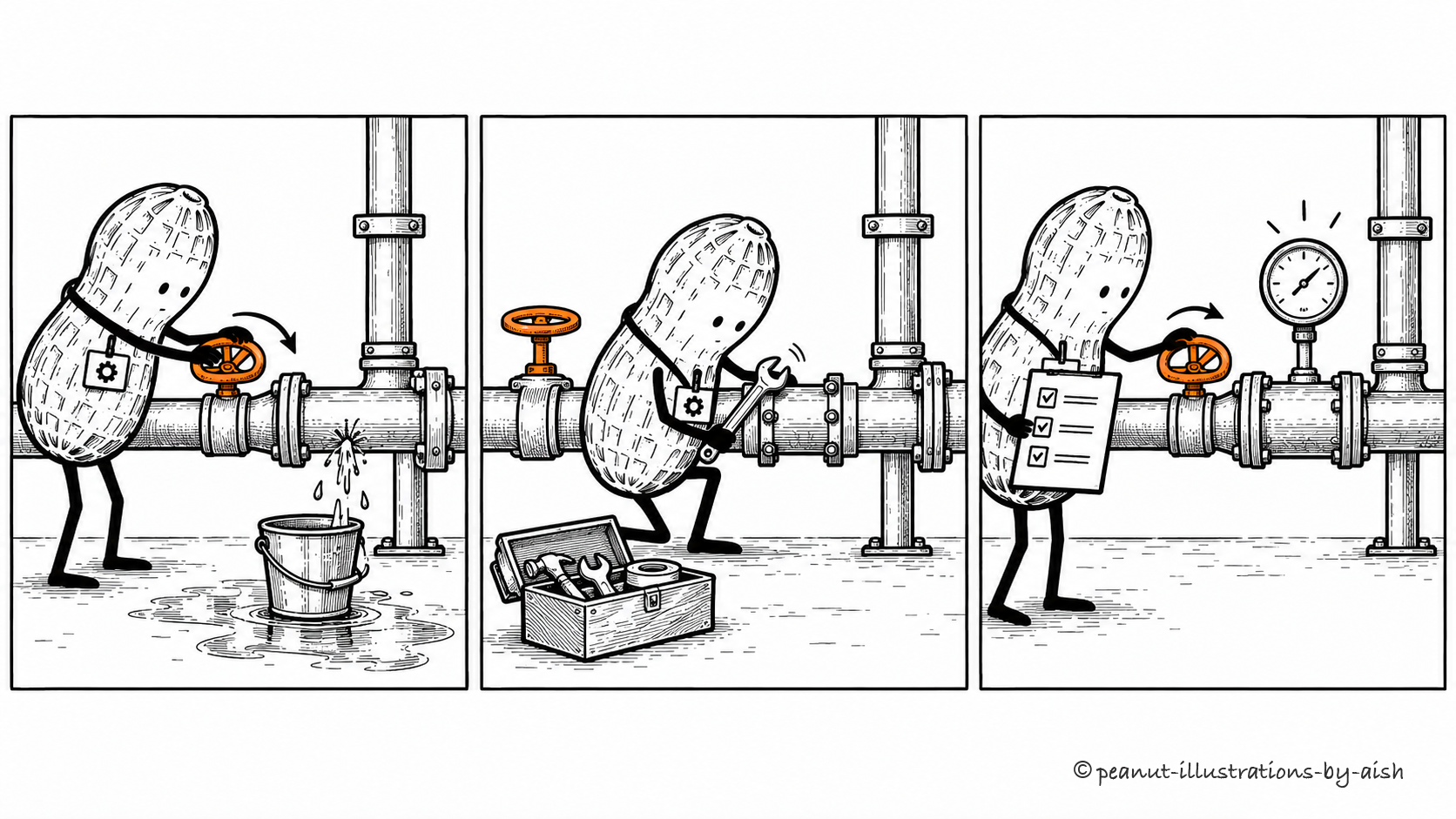
Close the affected valve before repairing the leak.The sequence represents containment, repair, and recovery, with verification before normal service resumes.
During an incident, the team needs to understand impact, contain the problem, and restore service. For an AI application, the issue could involve failed dependencies, incorrect actions, or exposed data. Preserve evidence as the response proceeds and communicate with affected people. Once service is restored, investigate the cause and address what allowed the failure to occur.