Did the job succeed, was the route acceptable, and what did it consume? Evaluate the outcome alongside the steps that produced it. A successful example is a starting point for measurement.
Agent evals
Systematic tests that assess an agent's behavior and results against defined criteria.
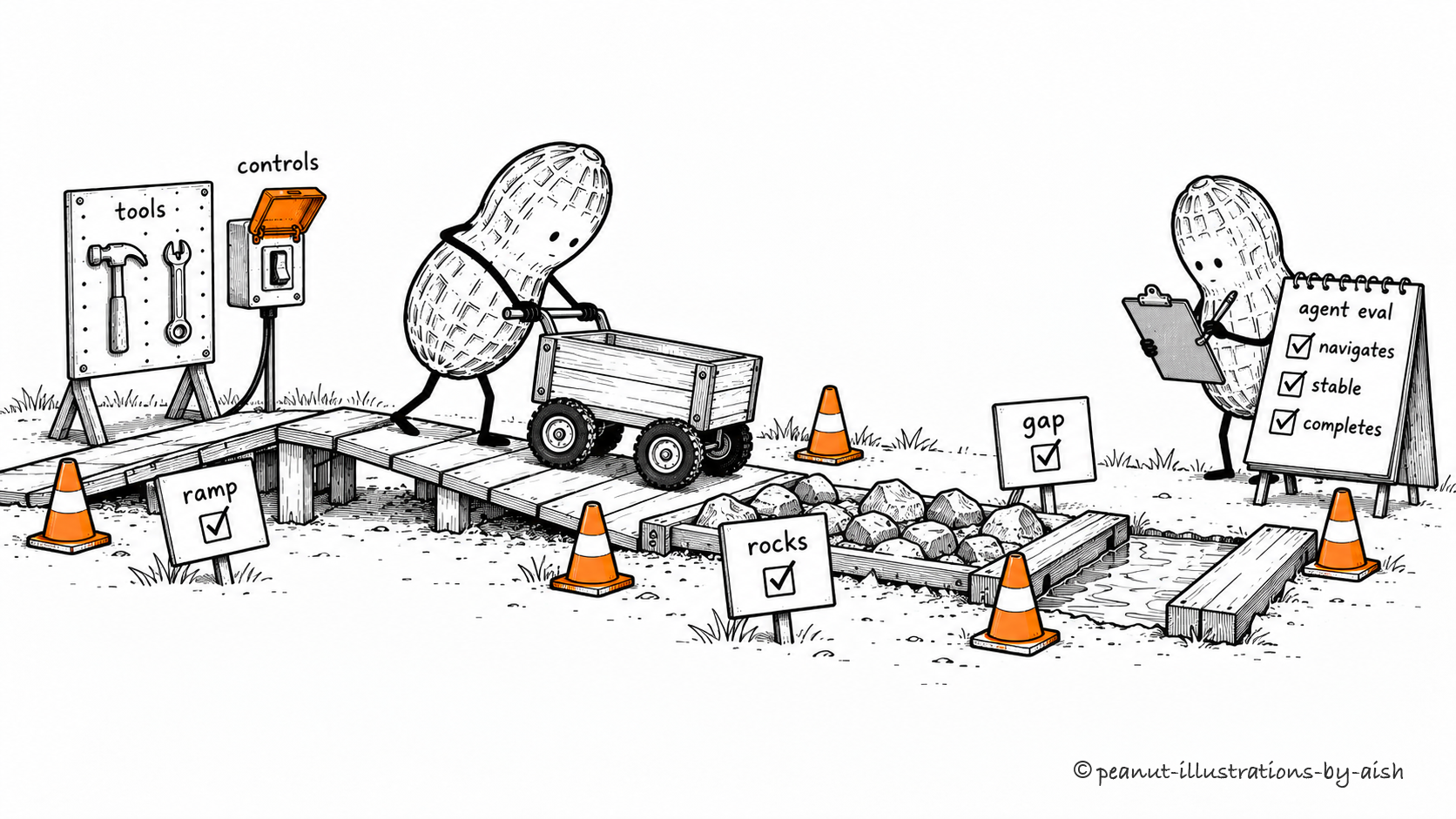
The cart gets the agreed obstacles, not the convenient ones.The yard represents a defined set of evaluation tasks and grading criteria, rather than an ordinary successful demonstration.
An evaluation suite pairs representative tasks with criteria for judging behavior and results. Graders may be code, people, or models. Include failures that matter in the intended use, and repeat trials where run-to-run variation is significant. The suite becomes useful engineering feedback when its results point to something the team can investigate or improve.
The proportion of evaluated tasks or runs that satisfy the defined success criteria.
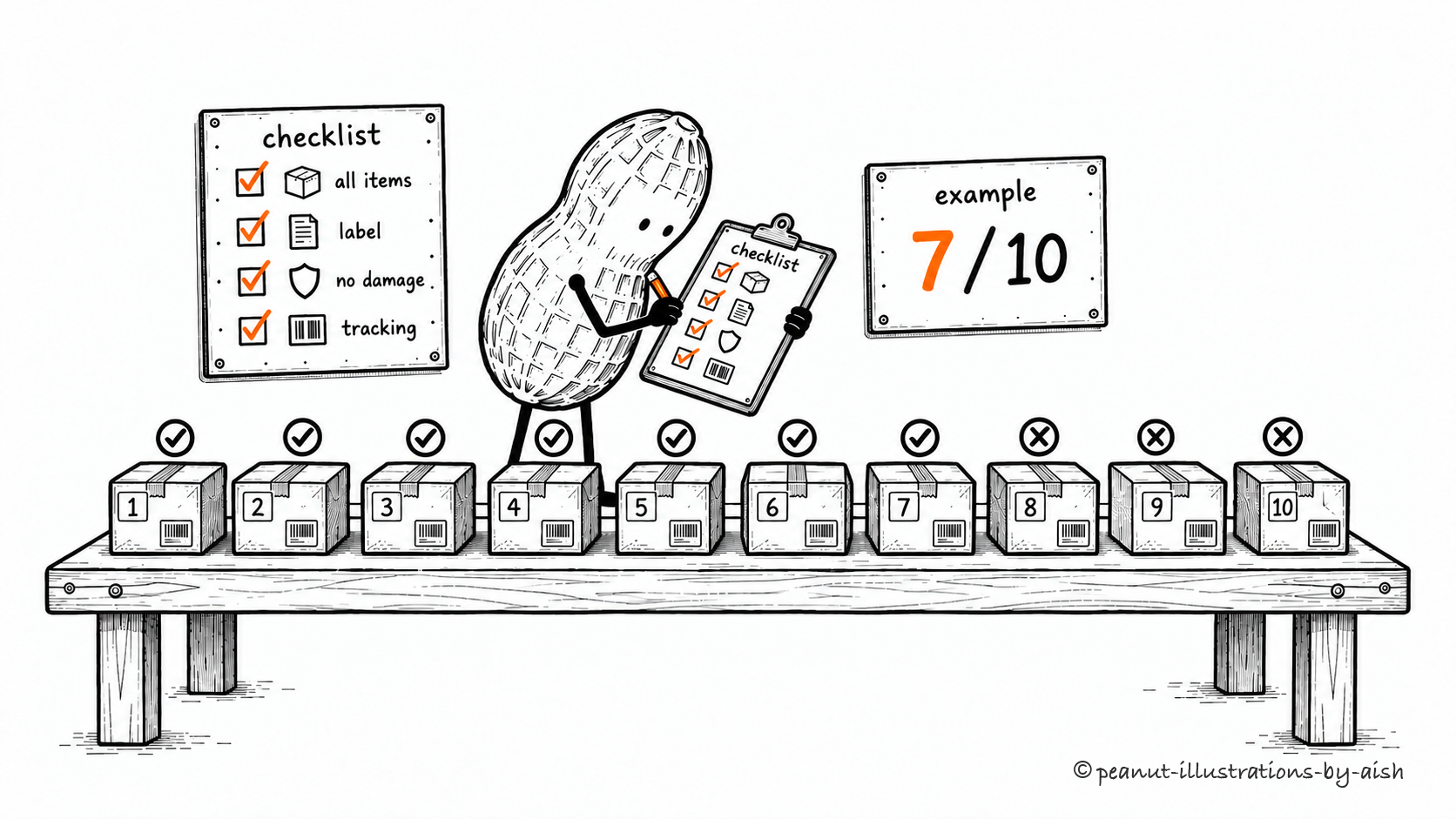
Seven deliveries pass the complete checklist. Three need attention.This is fictional test data. A success rate needs a defined task set and consistent criteria for the whole task.
For this illustrative test, seven successes out of ten evaluated deliveries gives a 70% success rate. Be explicit about the denominator: tasks, runs, and attempts can produce different measures. Also state the criteria and how retries count. That information lets a reader interpret the percentage and compare it fairly with another result.
Trajectory evaluation
Assessing the sequence of an agent's actions and observations, rather than only its final output.
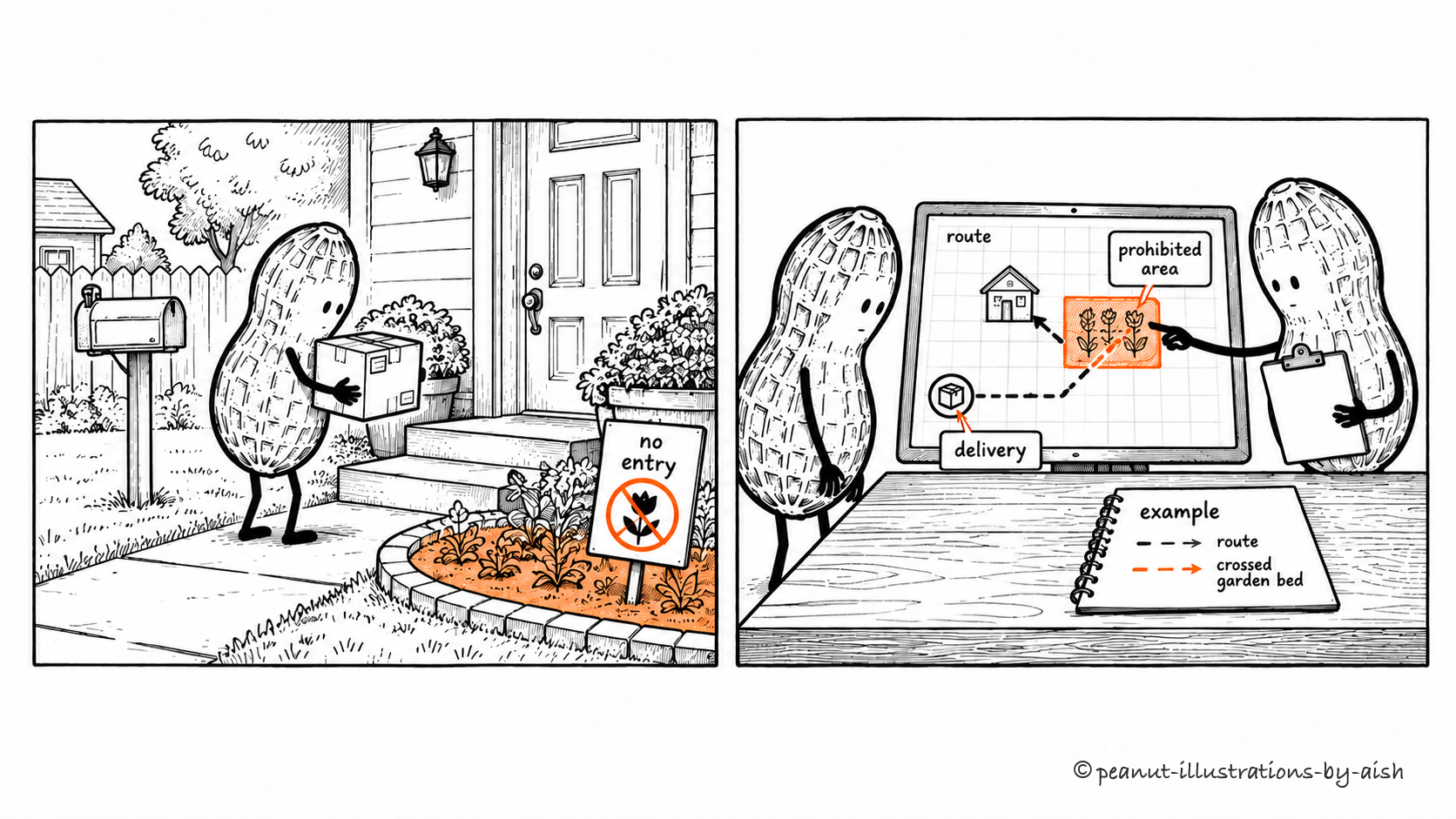
The parcel arrived. The footprints cross a prohibited garden bed.The destination was reached, but the route violated a constraint. Outcome and trajectory need separate assessment.
The delivery succeeded, but the route violated a constraint. A final-output check would miss that.
Trajectory evaluation examines actions and observations for behavior such as missed approvals, unsuitable tools, or wasteful loops. Allow valid alternative routes unless the task specifically requires one sequence.
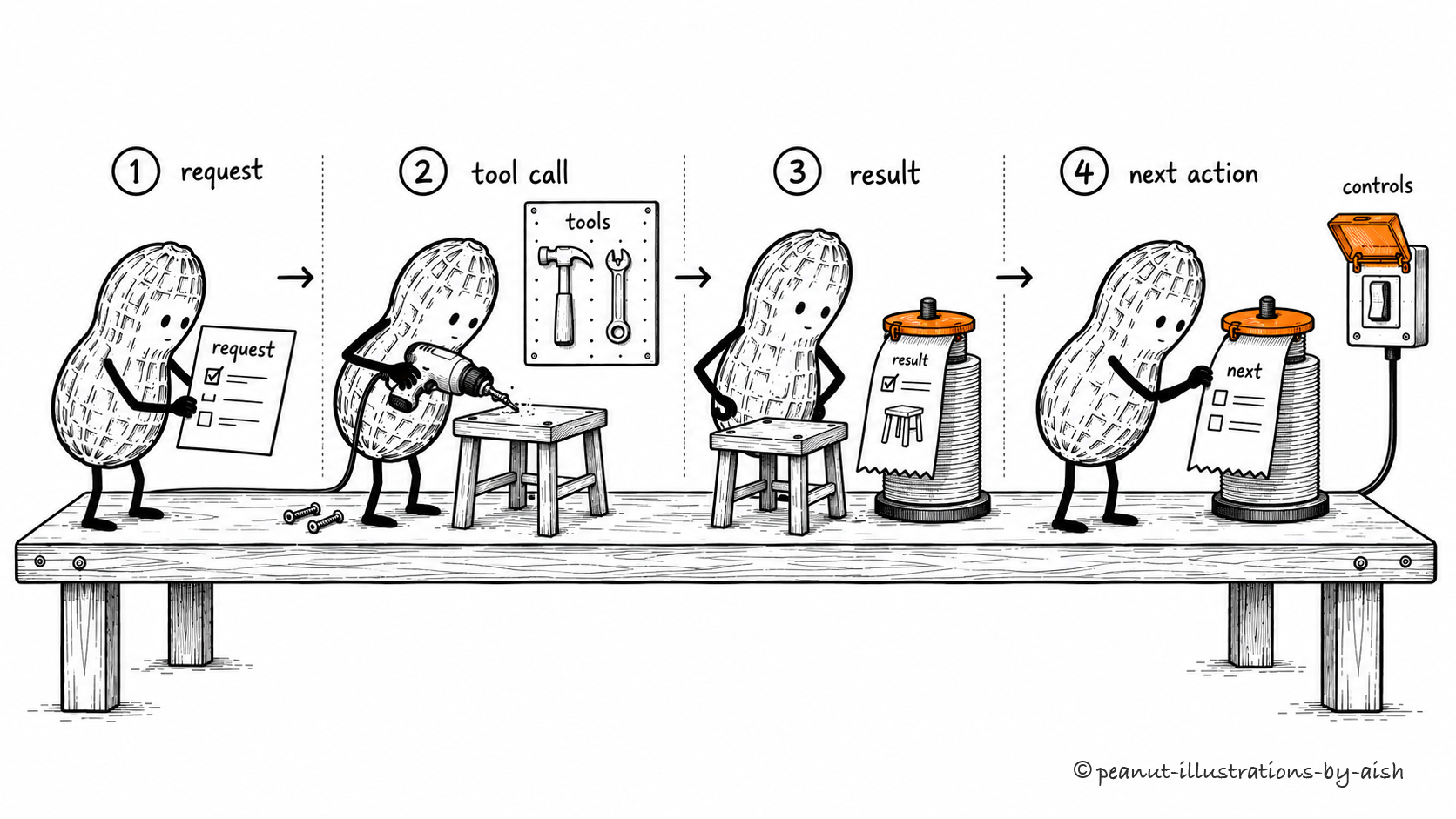
A measure of whether an agent's tool requests use appropriate tools and arguments for the task.
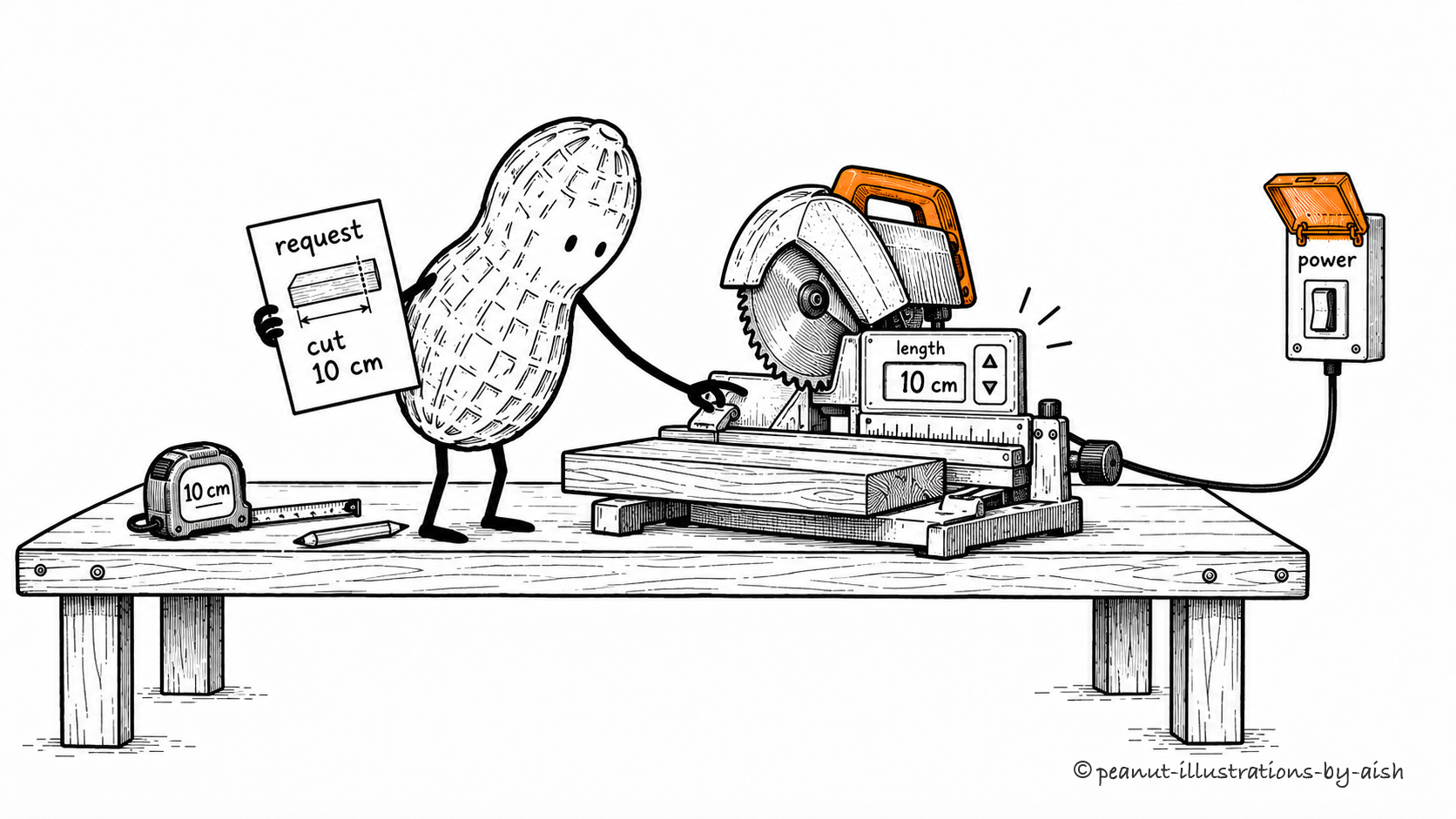
Right cutter, right length, right job.The call is checked for both tool selection and arguments. A correctly formed request can still need an outcome check.
Evaluate the selected tool and its arguments against the task's requirements. This separates a mistaken request from an execution failure at the service. A valid call to the wrong record is a tool-call problem even if the service reports success. Clear scoring criteria help identify which part of selection or argument construction needs work.
Regression testing
Re-running established checks after a change to detect behavior that has worsened or broken.
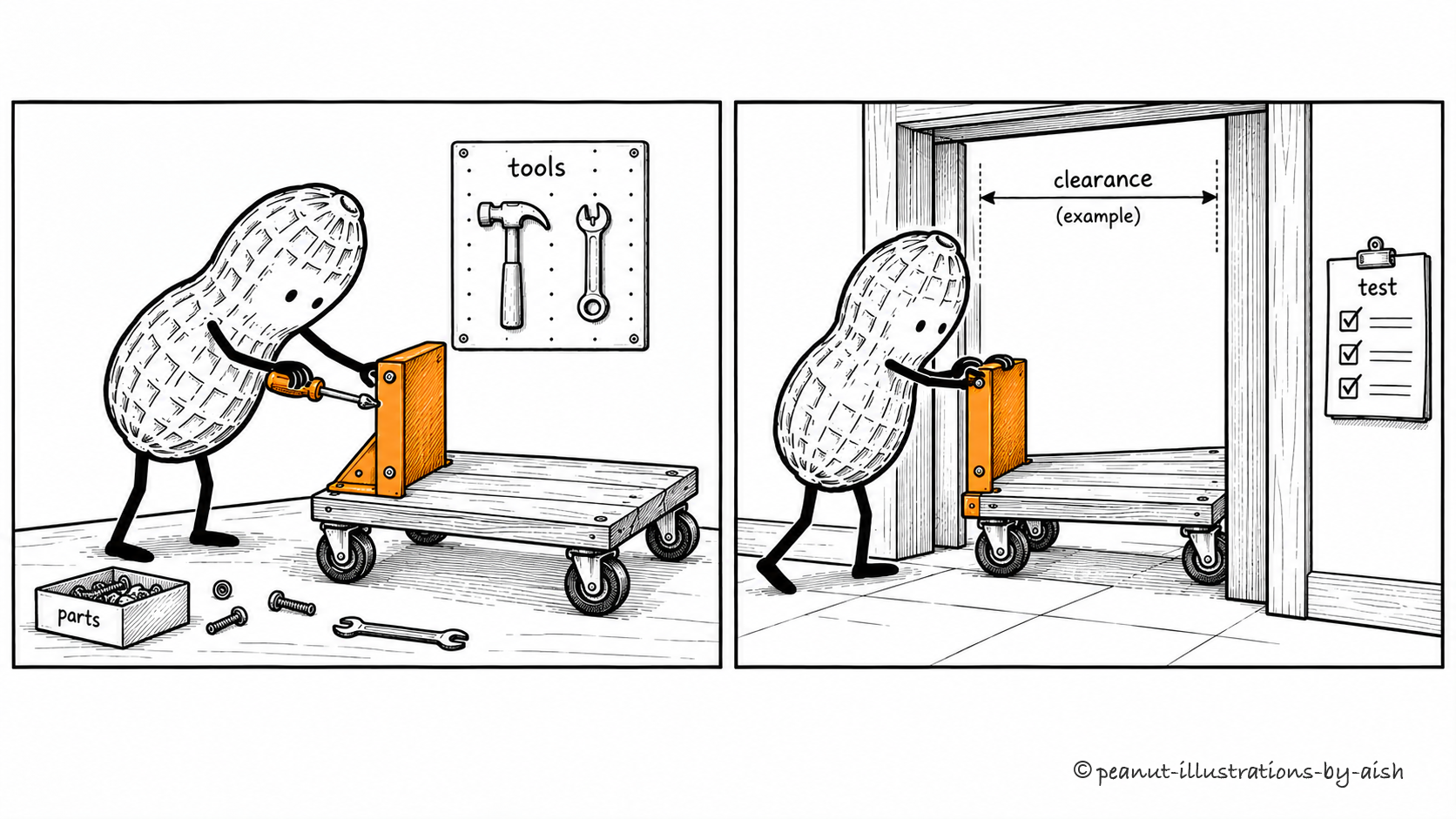
The new attachment must survive the old doorway test.The old clearance check is rerun after the change to detect damage to previously working behavior.
Changes to a prompt, model, tool, or retrieval setup can disturb behavior that used to work. Re-run established checks to catch that deterioration. Keep the test conditions comparable and use repeated trials where necessary to account for variability. A stable evaluation set gives the team a shared basis for discussing whether the new version is better.
Tracing
Recording connected execution events so a request or run can be inspected across its steps and services.
The receipts will be useful when someone asks what happened.The receipts represent recorded events from execution. They provide evidence for inspection, rather than a transcript of private model reasoning.
Tracing connects recorded operations from the same request or run. Model calls, tool results, timings, and errors become easier to investigate when their relationships are preserved. Instrumentation determines what is visible. Use a trace to reconstruct observed execution, without treating it as a complete account of the model's internal processing.
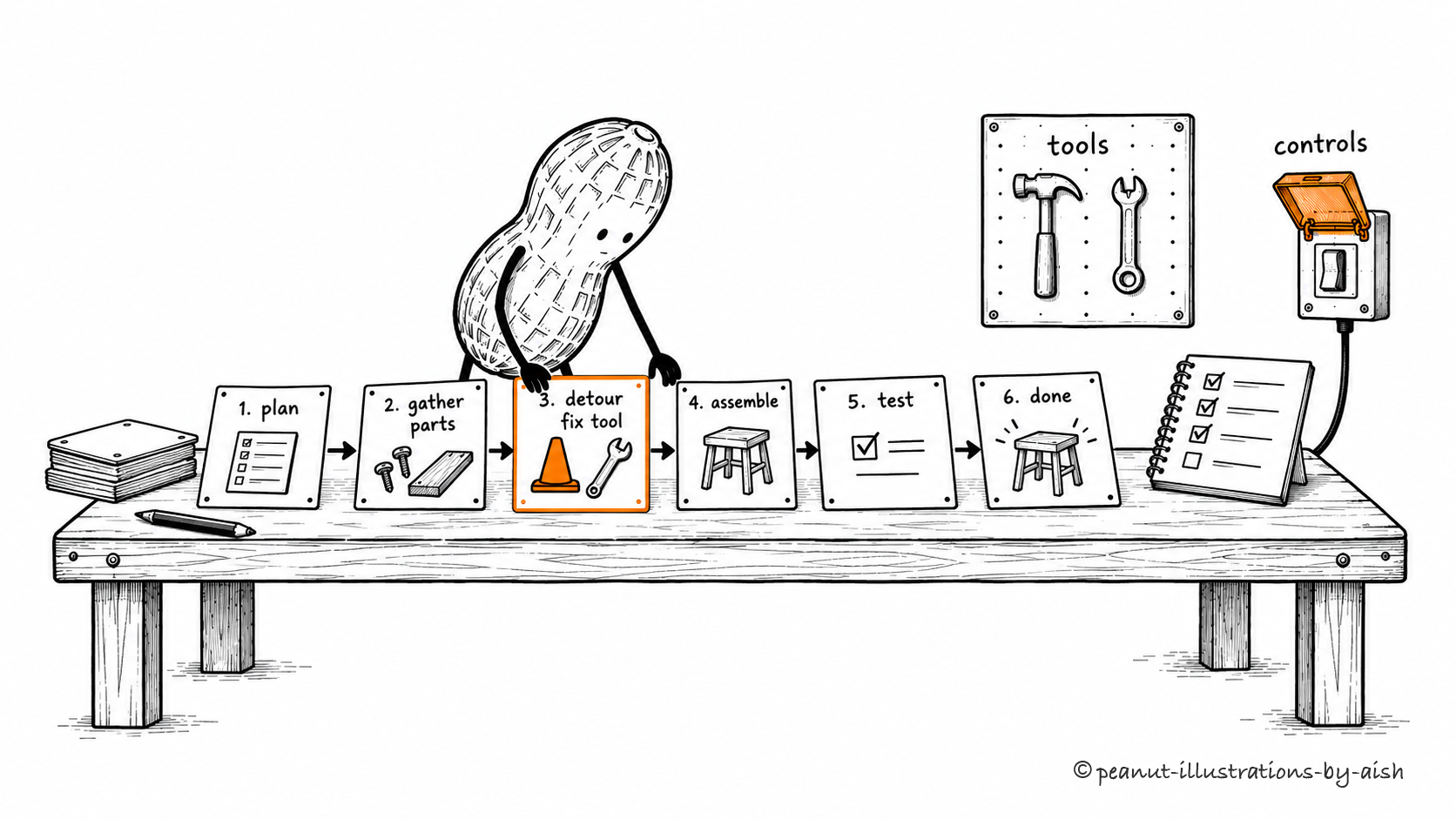
The ordered sequence of actions, observations, and relevant decisions made during a particular run.
This particular job took a detour.The detour belongs in the record because a trajectory describes the route actually taken.
The trajectory is the path a run took through actions, observations, and relevant decisions. A trace can supply the records needed to reconstruct it. Comparing trajectories helps explain why similar requests produced different outcomes. Sometimes the difference is a tool failure; sometimes it is a different decision made from the available context.
Spans
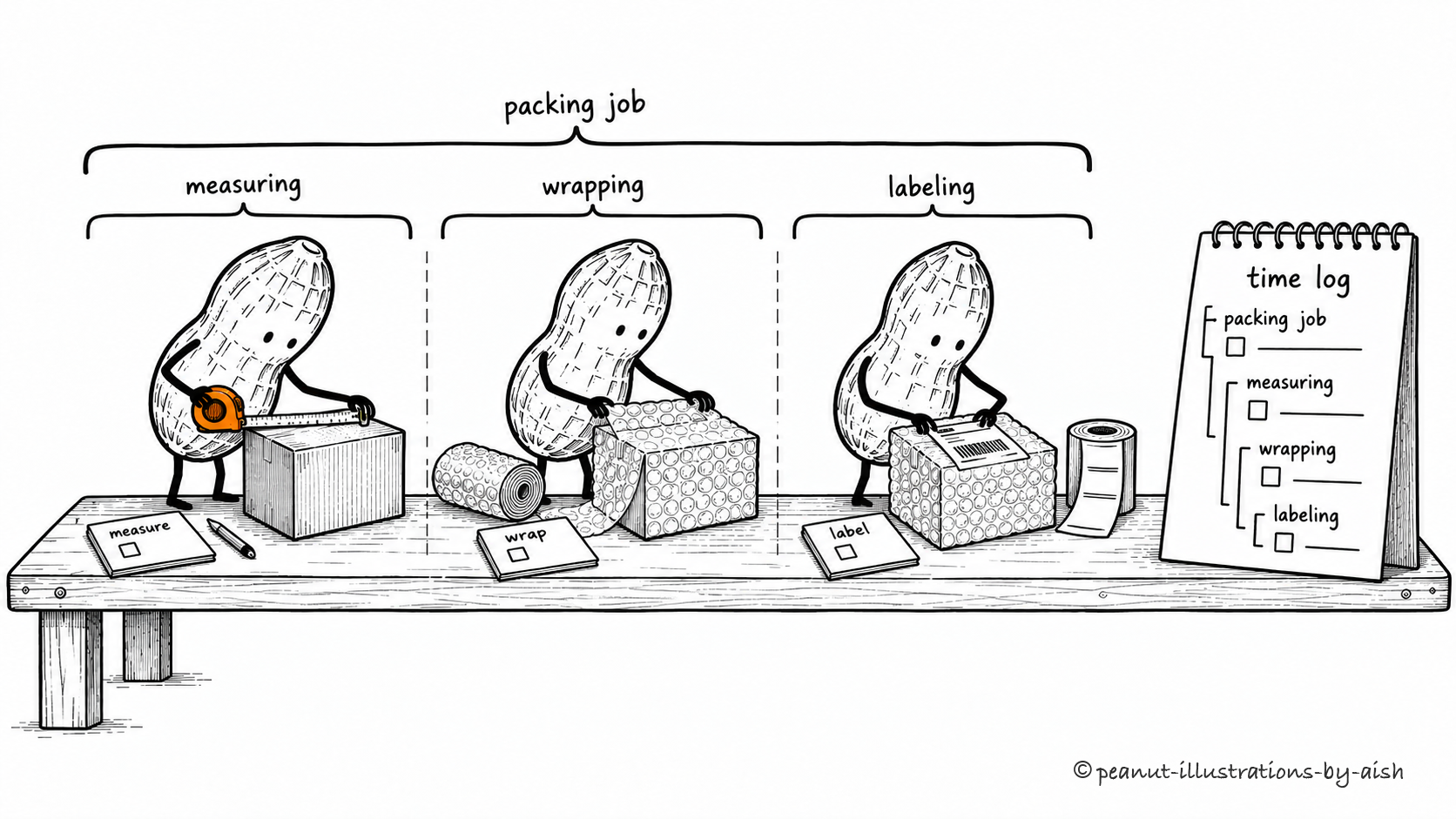
Recorded units of work within a trace, each with timing and contextual information.
Measuring, wrapping, and labeling each take their own slice of time.The long bracket represents a parent span; the shorter brackets represent child operations within it. The picture simplifies recorded timing.
A span records a unit of work with timing and contextual attributes. Parent-child relationships show operations performed within another operation. Concurrent spans can overlap, so adding their durations may exceed total elapsed time. This structure helps distinguish a slow tool from time spent elsewhere in the larger request.
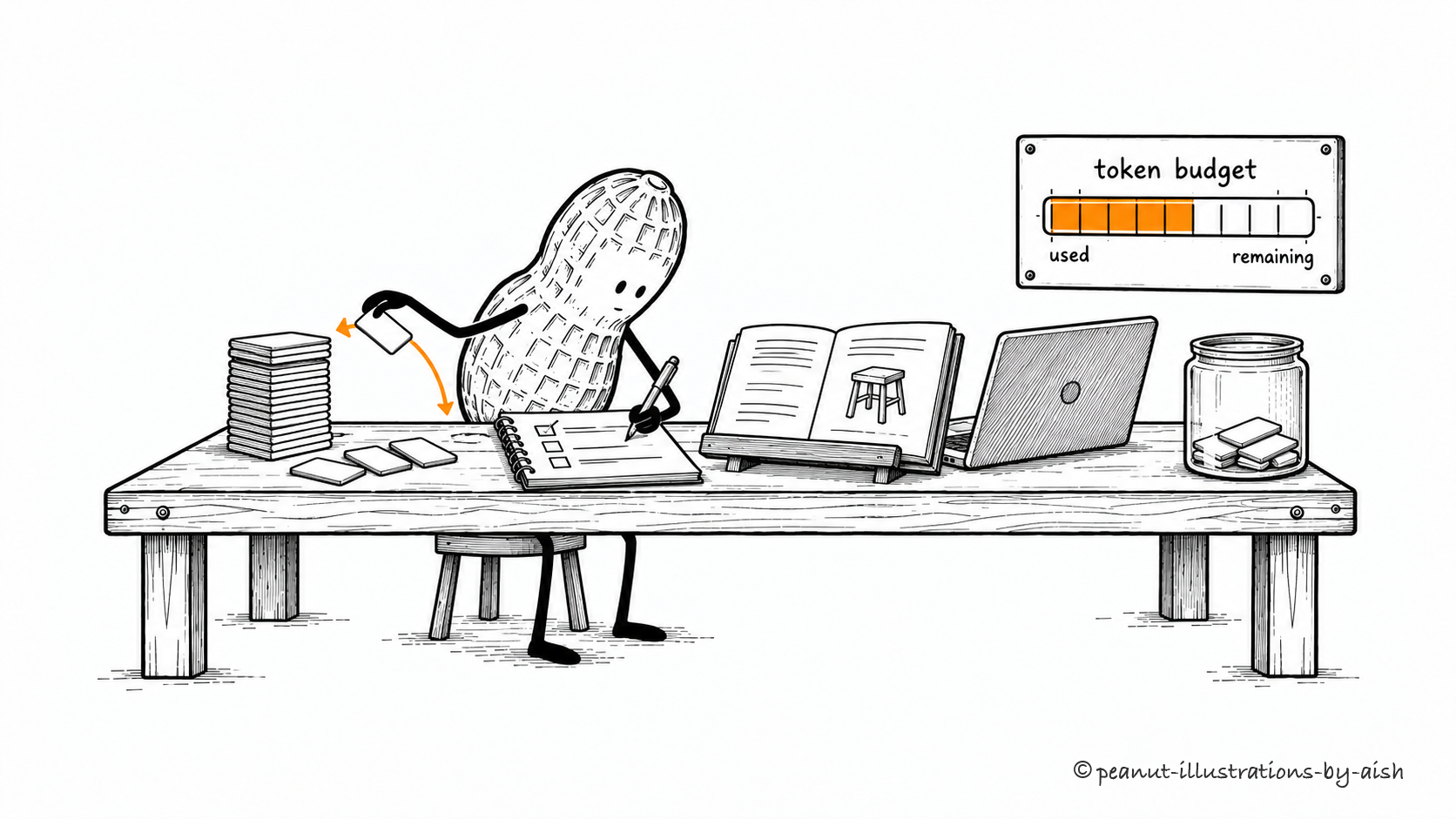
An allowance or limit on token usage for a defined model call, task, or period.
There is a finite allowance for this job.The pieces stand for tokens, which can be parts of words or other encoded units. The gauge represents an allowance for model processing and generation.
Set the scope of the allowance first: one call, a whole task, or an accounting period. Then specify how input, output, and reasoning usage count toward it.
A task budget can cover many model calls. The context window constrains a single inference context; the token units themselves are explained in Tokens and tokenization.
Latency
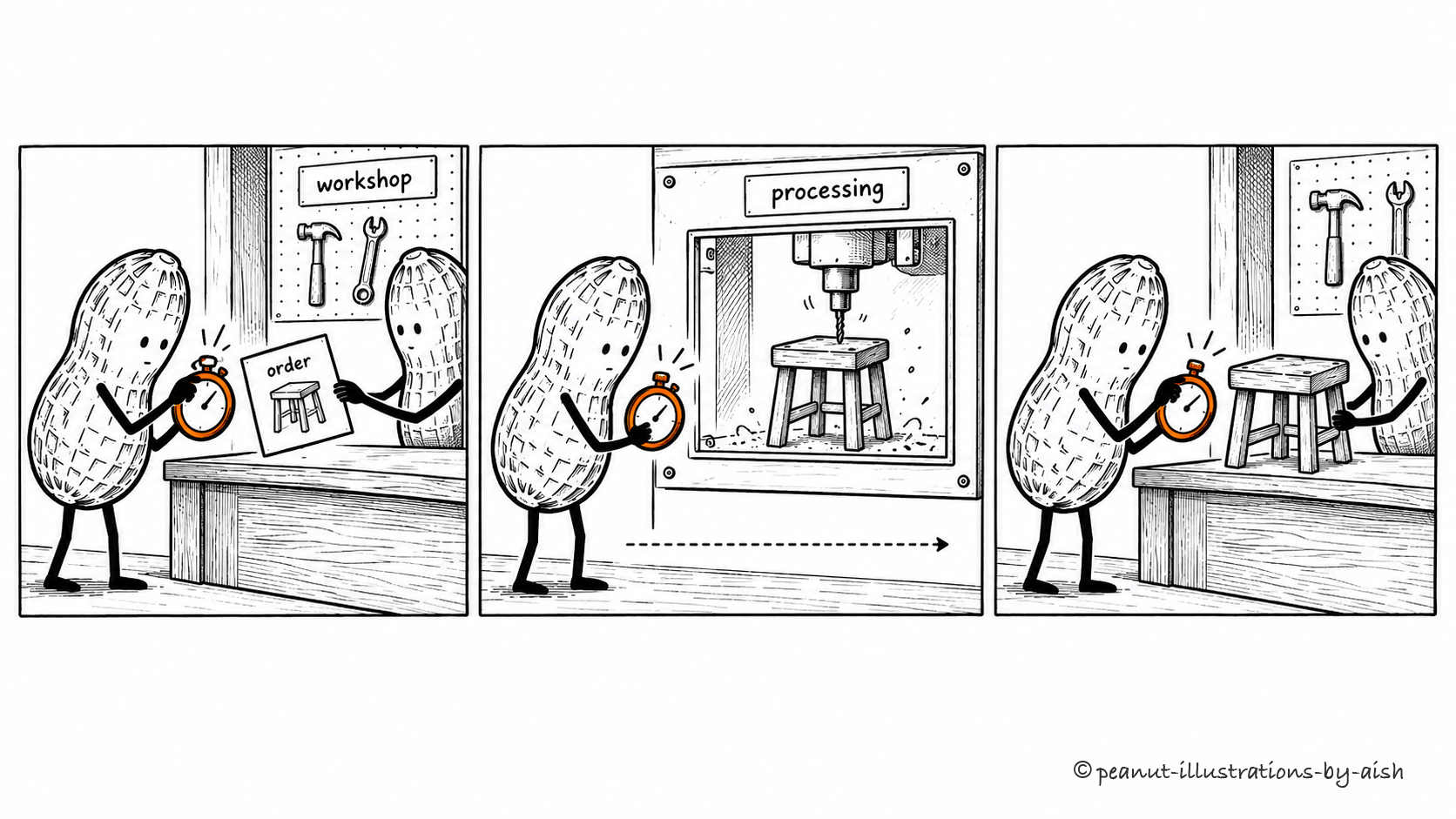
The elapsed time between a defined start event and the corresponding response or completion event.
Start the clock at the request. Choose where to stop it.The interval includes the wait for the result, not only the time spent generating a model response.
Time to the first output and time to task completion measure different experiences. Pick the interval that answers your question, then account for model calls, queues, tool waits, and retries within it. A faster initial response may coexist with a slow overall workflow. Name the metric when comparing versions or describing performance to users.
Cost per task
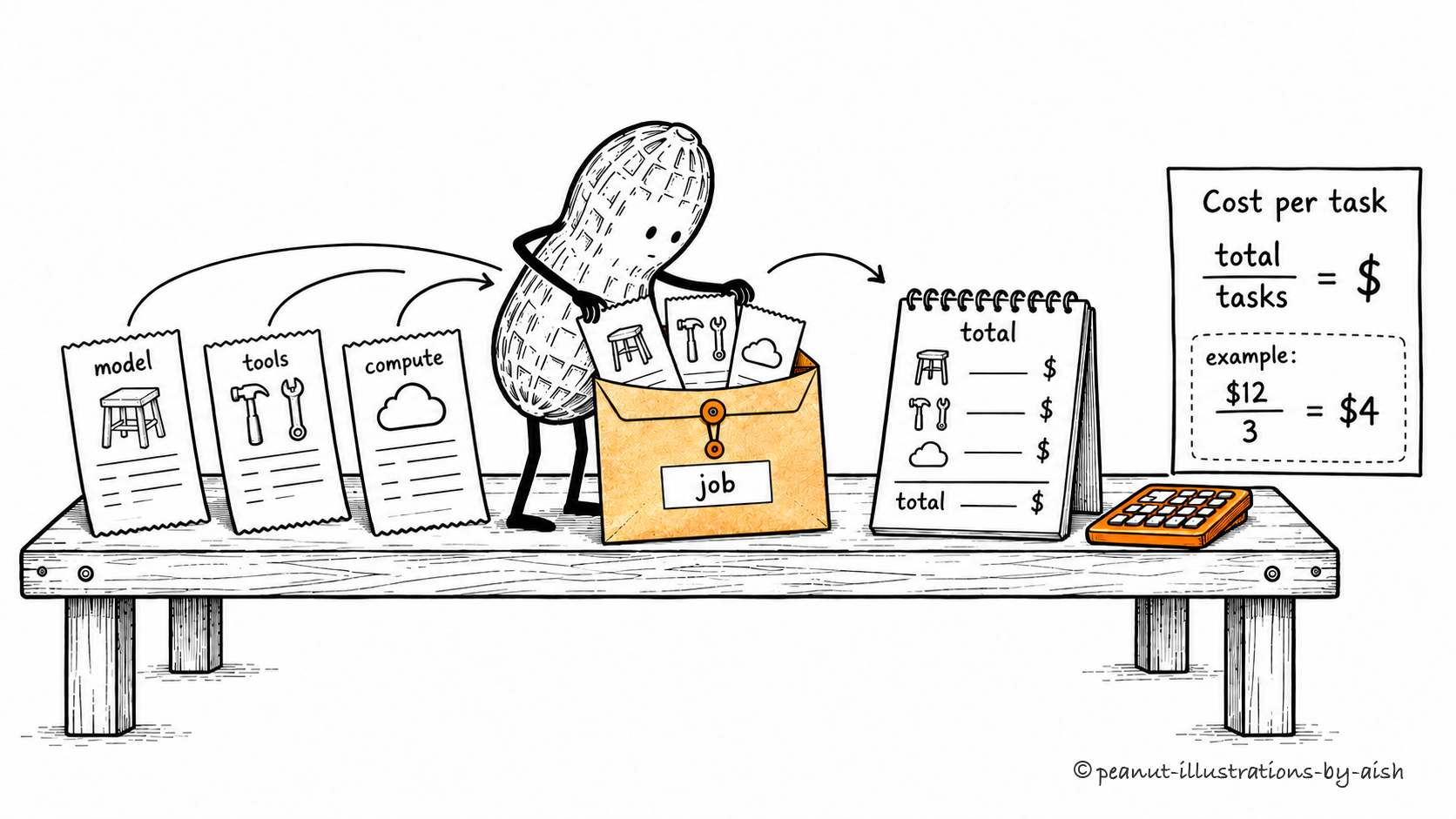
The cost attributed to completing or attempting one task under a stated accounting method.
The model receipt is only one item in the envelope.The envelope collects the costs attributed to the work. The separate arithmetic is a fictional example, not a quoted service price.
Decide which expenses belong to a task before calculating its cost. Token charges, tools, compute, and human review may all be relevant. Cost per attempt and cost per successful task tell different stories when failures are common. Use a consistent accounting boundary so a seemingly cheaper approach is not just leaving part of the bill elsewhere.
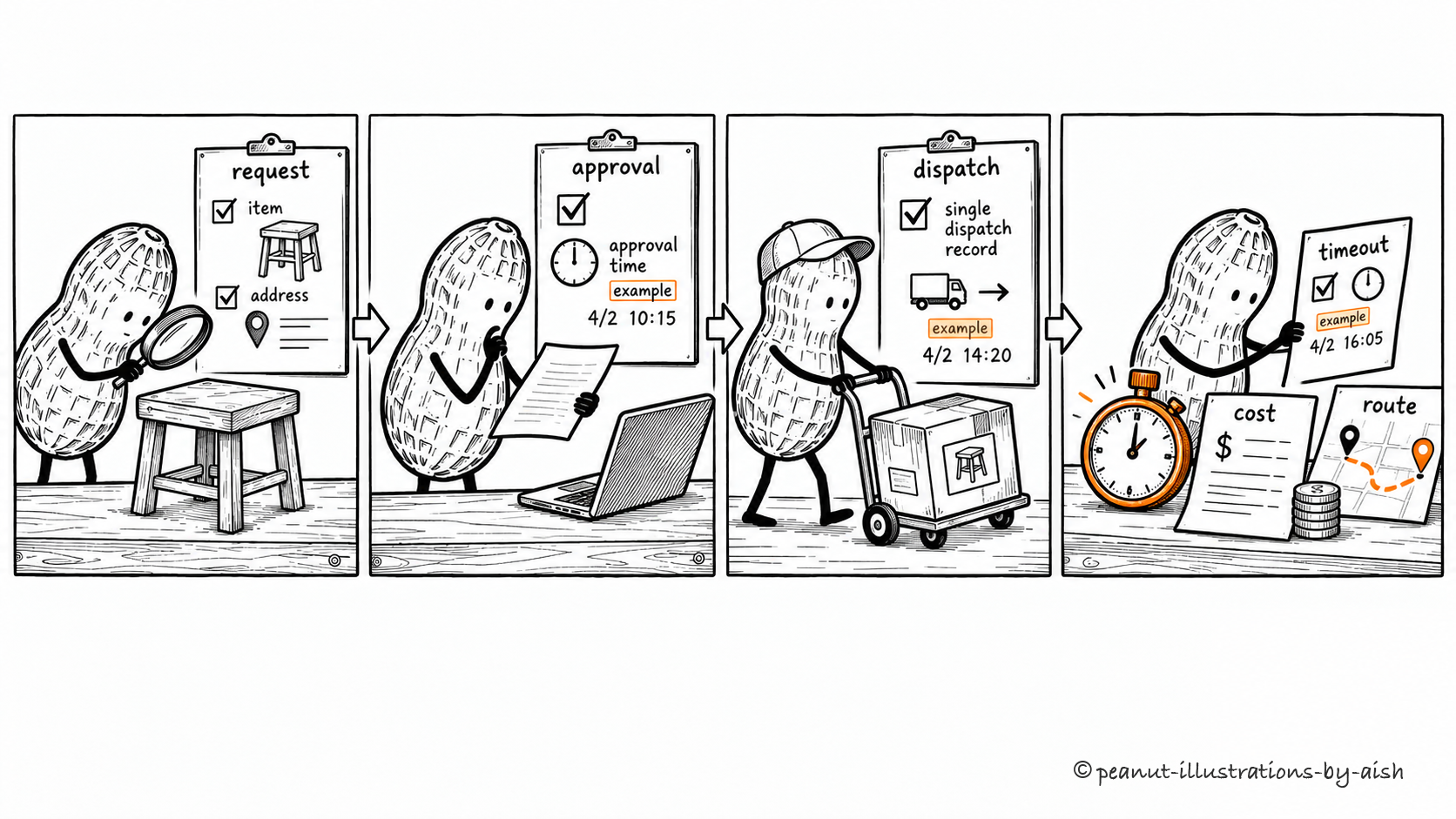
One replacement, the correct address, and approval before dispatch.The records are evidence for the evaluator. A lost reply is checked against the actual dispatch, approval, latency, and cost.
A successful dispatch answers only part of the evaluation. The reviewer also checks whether the agent used the correct details, obtained approval at the right time, and avoided a duplicate after the timeout. The recorded trajectory supplies evidence for those checks.
This run belongs in a broader suite with missing records, ineligible requests, and denied approvals. Repeating the suite after changes helps detect regressions. Timing and cost records answer a different question: what it took to complete the work.